Velopedia Bicycle Archive
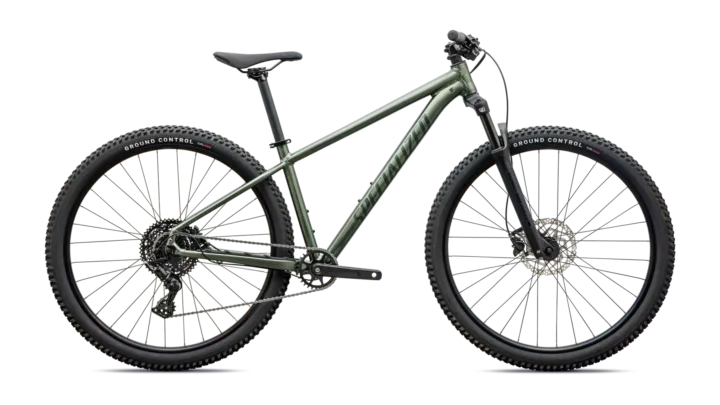
2026 Specialized Rockhopper Sport
Mountain bicycle from the Velopedia specification archive.
- Original MSRP
- $849.99
- Sizes
- XS - 27.5, S - 27.5, M - 27.5, S - 29, M - 29, L - 29, XL - 29, XXL - 29
- Colors
- Gloss Dune White / Oasis, Gloss Maroon / Deep Orange, Gloss Pine Green / Desert Rose, Gloss Smoke / Cool Grey
- Weight
- 14.02 kg (30 lb, 14.5 oz)
- Geometry
- 8 manufacturer sizes · Ride analysis
- Archive ID
- 900000963
Current market
Snapshot not yet availableMove, scroll, tap or type to start the protected update.
Velopedia analysis
What the specifications mean
Suspension is concentrated at the fork, so fork setup and rear-tire pressure are the main tools for balancing front and rear behavior. Both 27.5- and 29-inch wheels appear in the record, but it does not establish a mixed front/rear build; confirm the correct diameter for the selected frame size. The 418% cassette range describes the available gearing more clearly than the component-group name alone.
Used-bike inspection
If you’re buying this bike used
Before any test ride: both brakes should stop the bike firmly and release cleanly; both wheels should run true and be securely attached; tires should have no casing damage; and the headset, handlebar, stem, cranks and pedals should have no looseness or play.
Follow the full used-bike inspection order →- FrameLook closely for dents and hairline cracks around welds, the head tube and bottom-bracket area. Cosmetic scratches matter less than a change in shape or a crack line.Inspect the frame and fork →
- BrakesBoth levers should feel firm and return cleanly. Check for fluid around the levers and calipers, inspect pad thickness and contamination, and look for worn or bent rotors.Inspect the brakes →
- SuspensionAsk when the fork was last serviced. Check the stanchions for damage, look for oil at the seals and make sure the fork moves smoothly without bushing play.Evaluate the suspension →
- DrivetrainShift through every gear under light load and measure chain wear. Confirm that the shifter, derailleur, chain and cassette belong to the same 9-speed system.Check drivetrain wear →
- Wheels & tiresSpin both wheels and watch the rims for side-to-side or vertical movement. Check for dents, cracks, loose or uneven spokes and hub play, then inspect both tire casings for cuts, cracking or exposed threads.Check wheels and tires →
Bike-specific inspection checklist 20 checks based on 6 archived component groups Open checklistClose checklist
This checklist uses the archived equipment for this bike. It cannot confirm the condition, service history or later component changes of the example in front of you.
Identity and fit
Follow the full used-bike inspection order →Archived: 2026 Specialized Rockhopper Sport · Mountain · Published sizes: XS - 27.5, S - 27.5, M - 27.5, S - 29, M - 29, L - 29, XL - 29, XXL - 29
Frame and fork
Inspect the frame and fork →Archived: Frame: Specialized A1 premium butted alloy, zero-stack head tube, internal cable routing, 135x9mm forged dropouts, chainstay-mounted disc brake, replaceable alloy derailleur hanger, stealth rack mounts, dropper post compatible · Fork: SR Suntour XCM 29, 30mm stanchions, Rx Tune, coil spring, QR, 90/100mm travel (size-specific), 42mm offset
Suspension
Evaluate the suspension →Archived: Fork: SR Suntour XCM 29, 30mm stanchions, Rx Tune, coil spring, QR, 90/100mm travel (size-specific), 42mm offset
Drivetrain
Check drivetrain wear →Archived: Shifters: Shimano, CUES, 9-Speed Rapidfire, W/ Optical Gear Display · Rear derailleur: Shimano, CUES, 9-Speed · Crankset: Stout 1x, forged alloy, 30T · Bottom bracket: Square-tapered, 73mm, internal bearings, 122.5mm spindle · Cassette: Shimano CUES CS-LG300-9, 9 speed, 11-46t · Chain: KMC eGlide11-Speed
Brakes
Inspect the brakes →Archived: Brakes: (F) Shimano BR-MT200, hydraulic disc / (R) Shimano BR-MT200, hydraulic disc
Wheels and tires
Check wheels and tires →Archived: Wheel size: 27.5; 29 · Rims: Specialized alloy, disc only, double-wall, 25mm inner width, 32h · Hubs: (F) Alloy, Sealed bearing, 6-Bolt, disc, 100x9mm spacing, quick-release / (R) Alloy Sealed bearing, 6-Bolt, disc, 135x9mm spacing, quick-release · Front tire: Ground Control, 27.5/29x2.35, T5 · Rear tire: Ground Control, 27.5/29x2.35, T5
Controls and contact points
Archived: Handlebar: Alloy Mini Rise, 9-degree backsweep, 15mm rise, 31.8mm · Stem: 3D-forged alloy, 31.8mm, 7-degree rise · Seatpost: Alloy, 2-bolt clamp, 30.9mm · Saddle: Bridge Sport, Steel rails · Pedals: Specialized, platform
Before and during the test ride
Follow the full used-bike inspection order →Interpretation based on the archived manufacturer specifications. Confirm exact fit and standards before ordering parts or performing service.
Have you owned this bike?Help preserve its real-world history by sharing your owner experience.
Share the details that would help another rider understand how this model fits, rides and holds up over time. Velopedia reviews every contribution before publication.
Already contributed? Send me a fresh private edit link
For privacy, Velopedia shows the same confirmation whether or not an experience exists.
Frameset
| Frame Construction | Specialized A1 premium butted alloy, zero-stack head tube, internal cable routing, 135x9mm forged dropouts, chainstay-mounted disc brake, replaceable alloy derailleur hanger, stealth rack mounts, dropper post compatible |
|---|---|
| Frame Material | Aluminum |
| Fork | SR Suntour XCM 29, 30mm stanchions, Rx Tune, coil spring, QR, 90/100mm travel (size-specific), 42mm offset |
Drivetrain
| Shifters | Shimano, CUES, 9-Speed Rapidfire, W/ Optical Gear Display |
|---|---|
| Rear Derailleur | Shimano, CUES, 9-Speed |
| Crankset | Stout 1x, forged alloy, 30T |
| Bottom Bracket | Square-tapered, 73mm, internal bearings, 122.5mm spindle |
| BB Shell Width | 73 mm |
| Cassette | Shimano CUES CS-LG300-9, 9 speed, 11-46t |
| Chain | KMC eGlide11-Speed |
| Pedals | Specialized, platform |
Brakes
| Brakes | (F) Shimano BR-MT200, hydraulic disc / (R) Shimano BR-MT200, hydraulic disc |
|---|
Cockpit & Contact Points
| Handlebar | Alloy Mini Rise, 9-degree backsweep, 15mm rise, 31.8mm |
|---|---|
| Stem | 3D-forged alloy, 31.8mm, 7-degree rise |
| Saddle | Bridge Sport, Steel rails |
| Seatpost | Alloy, 2-bolt clamp, 30.9mm |
Wheels & Tires
| Hubs | (F) Alloy, Sealed bearing, 6-Bolt, disc, 100x9mm spacing, quick-release / (R) Alloy Sealed bearing, 6-Bolt, disc, 135x9mm spacing, quick-release |
|---|---|
| Rims | Specialized alloy, disc only, double-wall, 25mm inner width, 32h |
| Spokes | Stainless, 14g |
| Front Tire | Ground Control, 27.5/29x2.35, T5 |
| Rear Tire | Ground Control, 27.5/29x2.35, T5 |
| Wheel Size | 27.5; 29 |
Size-specific frame data
Geometry
Manufacturer-published geometry normalized for consistent archival comparison. Effective top tube and reach remain separate measurements because they describe different aspects of fit.
| Measurement | XS - 27.5 | S - 27.5 | M - 27.5 | S - 29 | M - 29 | L - 29 | XL - 29 | XXL - 29 |
|---|---|---|---|---|---|---|---|---|
| Seat tube | 310 mm | 350 mm | 400 mm | 360 mm | 400 mm | 450 mm | 500 mm | 560 mm |
| Effective top tube | 541 mm | 565 mm | 589 mm | 586 mm | 608 mm | 630 mm | 654 mm | 679 mm |
| Head tube | 95 mm | 100 mm | 105 mm | 95 mm | 95 mm | 105 mm | 120 mm | 135 mm |
| Head-tube angle | 68° | 68° | 68° | 68.5° | 68.5° | 68.5° | 68.5° | 68.5° |
| Seat-tube angle | 73.5° | 73.5° | 73.5° | 73.5° | 73.5° | 73.5° | 73.5° | 73.5° |
| Chainstay / rear center | 440 mm | 440 mm | 440 mm | 440 mm | 440 mm | 440 mm | 440 mm | 440 mm |
| Wheelbase | 1067 mm | 1092 mm | 1118 mm | 1105 mm | 1128 mm | 1152 mm | 1178 mm | 1203 mm |
| Bottom-bracket drop | 43 mm | 43 mm | 43 mm | 62 mm | 62 mm | 62 mm | 62 mm | 62 mm |
| Bottom-bracket height | 310 mm | 310 mm | 310 mm | 310 mm | 310 mm | 310 mm | 310 mm | 310 mm |
| Reach | 375 mm | 395 mm | 415 mm | 405 mm | 425 mm | 445 mm | 465 mm | 485 mm |
| Stack | 559 mm | 573 mm | 589 mm | 607 mm | 616 mm | 626 mm | 640 mm | 654 mm |
| Fork offset / rake | 42 mm | 42 mm | 42 mm | 46 mm | 46 mm | 46 mm | 46 mm | 46 mm |
| Front center | 630 mm | 656 mm | 682 mm | 672 mm | 696 mm | 719 mm | 745 mm | 770 mm |
| Trail | 97 mm | 97 mm | 97 mm | 97 mm | 97 mm | 97 mm | 97 mm | 97 mm |
| Fork length / axle-to-crown | 475 mm | 485 mm | 495 mm | 505 mm | 515 mm | 515 mm | 515 mm | 515 mm |
| Crank length | 165 mm | 170 mm | 170 mm | 170 mm | 170 mm | 175 mm | 175 mm | — |
| Stem length | 40 mm | 40 mm | 60 mm | 40 mm | 60 mm | 60 mm | 70 mm | — |
| Handlebar width | 700 mm | 720 mm | 740 mm | 720 mm | 740 mm | 740 mm | 740 mm | — |
| Wheel size | 27.5in | 27.5in | 27.5in | 29in | 29in | 29in | 29in | 29in |
Geometry source: Manufacturer HTML geometry table ↗ Measurements can vary by configuration, wheel size, or flip-chip position where noted by the manufacturer.
Geometry interpretation
What this geometry means
The manufacturer publishes more than one geometry configuration. Velopedia analyzes each labeled state separately while treating them as one chassis in archive comparisons.
XS geometry
27.5
Riding position
The 559 mm stack is tall relative to the 375 mm reach, pointing to a more upright front-end position rather than an especially long, low cockpit. The 73.5° effective seat angle is comparatively relaxed for a modern mountain bike, placing the seated position farther behind the bottom bracket than a steep climbing-oriented layout.
Handling tendencies
A 68° head angle combined with a 1067 mm wheelbase points to quicker-steering and more responsive steering and chassis behavior. The longer the chassis and slacker the front end, the more the bike tends to favor composure over very quick direction changes.
Archive context
Its reach of 375 mm sits toward the shorter end. Its stack of 559 mm sits toward the lower end. Its wheelbase of 1067 mm sits toward the shorter end.
S geometry
Riding position
The 573 mm stack is tall relative to the 395 mm reach, pointing to a more upright front-end position rather than an especially long, low cockpit. The 73.5° effective seat angle is comparatively relaxed for a modern mountain bike, placing the seated position farther behind the bottom bracket than a steep climbing-oriented layout.
Handling tendencies
A 68° head angle combined with a 1092 mm wheelbase points to quicker-steering and more responsive steering and chassis behavior. The longer the chassis and slacker the front end, the more the bike tends to favor composure over very quick direction changes.
Configuration changes
Compared with 29, this configuration reduces bottom-bracket drop by 19 mm, slackens the head angle by 0.5°, shortens reach by 10 mm, and reduces stack by 34 mm.
Archive context
Its reach of 395 mm sits toward the shorter end. Its stack of 573 mm sits toward the lower end. Its wheelbase of 1092 mm sits toward the shorter end.
Riding position
The 607 mm stack is tall relative to the 405 mm reach, pointing to a more upright front-end position rather than an especially long, low cockpit. The 73.5° effective seat angle is comparatively relaxed for a modern mountain bike, placing the seated position farther behind the bottom bracket than a steep climbing-oriented layout.
Handling tendencies
A 68.5° head angle combined with a 1105 mm wheelbase points to quicker-steering and more responsive steering and chassis behavior. The longer the chassis and slacker the front end, the more the bike tends to favor composure over very quick direction changes.
Configuration changes
Compared with 27.5, this configuration increases bottom-bracket drop by 19 mm, steepens the head angle by 0.5°, extends reach by 10 mm, and adds stack by 34 mm.
Archive context
Its bottom-bracket drop of 62 mm sits toward the deeper-drop end. Its reach of 405 mm sits toward the shorter end. The head angle of 68.5° sits toward the steeper end.
M geometry
Riding position
The 589 mm stack is tall relative to the 415 mm reach, pointing to a more upright front-end position rather than an especially long, low cockpit. The 73.5° effective seat angle is comparatively relaxed for a modern mountain bike, placing the seated position farther behind the bottom bracket than a steep climbing-oriented layout.
Handling tendencies
A 68° head angle combined with a 1118 mm wheelbase points to quicker-steering and more responsive steering and chassis behavior. The longer the chassis and slacker the front end, the more the bike tends to favor composure over very quick direction changes.
Configuration changes
Compared with 29, this configuration reduces bottom-bracket drop by 19 mm, slackens the head angle by 0.5°, shortens reach by 10 mm, and reduces stack by 27 mm.
Archive context
Its reach of 415 mm sits toward the shorter end. Its wheelbase of 1118 mm sits toward the shorter end. Its stack of 589 mm sits toward the lower end.
Riding position
The 616 mm stack is tall relative to the 425 mm reach, pointing to a more upright front-end position rather than an especially long, low cockpit. The 73.5° effective seat angle is comparatively relaxed for a modern mountain bike, placing the seated position farther behind the bottom bracket than a steep climbing-oriented layout.
Handling tendencies
A 68.5° head angle combined with a 1128 mm wheelbase points to quicker-steering and more responsive steering and chassis behavior. The longer the chassis and slacker the front end, the more the bike tends to favor composure over very quick direction changes.
Configuration changes
Compared with 27.5, this configuration increases bottom-bracket drop by 19 mm, steepens the head angle by 0.5°, extends reach by 10 mm, and adds stack by 27 mm.
Archive context
Its reach of 425 mm sits toward the shorter end. Its bottom-bracket drop of 62 mm sits toward the deeper-drop end. Its wheelbase of 1128 mm sits toward the shorter end.
L geometry
29
Riding position
The 626 mm stack is tall relative to the 445 mm reach, pointing to a more upright front-end position rather than an especially long, low cockpit. The 73.5° effective seat angle is comparatively relaxed for a modern mountain bike, placing the seated position farther behind the bottom bracket than a steep climbing-oriented layout.
Handling tendencies
A 68.5° head angle combined with a 1152 mm wheelbase points to quicker-steering and more responsive steering and chassis behavior. The longer the chassis and slacker the front end, the more the bike tends to favor composure over very quick direction changes.
Archive context
Its reach of 445 mm sits toward the shorter end. Its bottom-bracket drop of 62 mm sits toward the deeper-drop end. The seat angle of 73.5° sits toward the more relaxed end.
XL geometry
29
Riding position
A 465 mm reach paired with 640 mm of stack gives this size a moderate frame proportion: roomy enough when standing without pushing strongly toward either a very low or very upright front end. The 73.5° effective seat angle is comparatively relaxed for a modern mountain bike, placing the seated position farther behind the bottom bracket than a steep climbing-oriented layout.
Handling tendencies
A 68.5° head angle combined with a 1178 mm wheelbase points to quicker-steering and more responsive steering and chassis behavior. The longer the chassis and slacker the front end, the more the bike tends to favor composure over very quick direction changes.
Archive context
Its reach of 465 mm sits toward the shorter end. Its wheelbase of 1178 mm sits toward the shorter end. Its bottom-bracket drop of 62 mm sits toward the deeper-drop end.
XXL geometry
29
Riding position
A 485 mm reach paired with 654 mm of stack gives this size a moderate frame proportion: roomy enough when standing without pushing strongly toward either a very low or very upright front end. The 73.5° effective seat angle is comparatively relaxed for a modern mountain bike, placing the seated position farther behind the bottom bracket than a steep climbing-oriented layout.
Handling tendencies
A 68.5° head angle combined with a 1203 mm wheelbase points to quicker-steering and more responsive steering and chassis behavior. The longer the chassis and slacker the front end, the more the bike tends to favor composure over very quick direction changes.
Archive context
Its reach of 485 mm sits toward the shorter end. Its wheelbase of 1203 mm sits toward the shorter end. The chainstay of 440 mm sits toward the shorter rear-center end.
Geometry describes frame proportions and likely tendencies, not a ride test. Rider proportions, cockpit setup, tires, suspension settings, wheel configuration, and component choices can materially change how a bicycle fits and feels.
Gallery
Specifications are presented as a reference. Components may vary by market, size, production run, or later manufacturer revisions.