2027
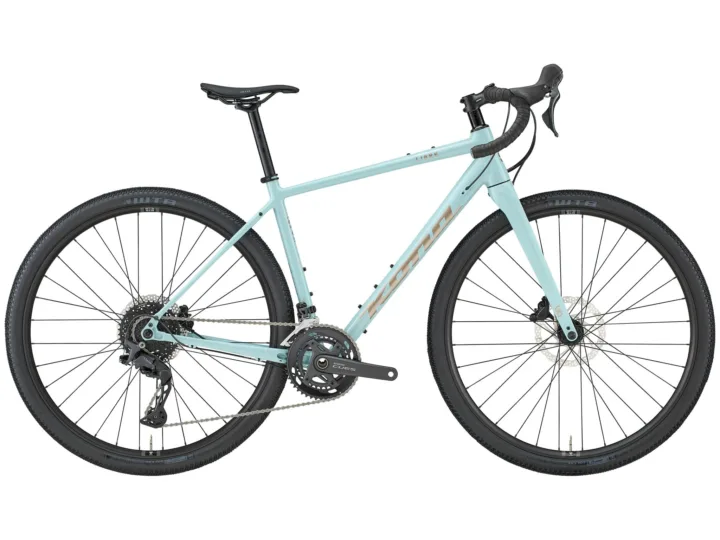
Libre
Original MSRP $2,299.00
Velopedia Brand Reference
Founded in 1988 in Vancouver, Kona quickly became known for its mountain bike innovations, especially in freeride and downhill. Over the years, Kona has expanded into commuter, gravel, and e-bikes.
Velopedia Bicycle Archive
Model years 1993–2027
Company overview
Kona is a Pacific Northwest bicycle brand best known for mountain bikes, progressive hardtails, and unconventional adventure bikes. Its current catalog also covers gravel, touring, commuting, electric assistance, dirt jumping, fat biking, and youth riding. It does not presently offer a conventional road-racing range.
The lineup extends from accessible aluminum hardtails and commuters to carbon full-suspension bikes, long-travel e-MTBs, steel touring bikes, and drop-bar machines equipped more like mountain bikes than traditional gravel bikes. This breadth is central to Kona’s identity, but it also makes the model name alone a poor guide to fit, intended terrain, or component compatibility.
Kona underwent two major ownership changes in a short period. Kent Outdoors acquired the business in 2022, and original founders Dan Gerhard and Jake Heilbron led a group that bought it back in 2024. The reorganized company has since introduced new products, rebuilt its dealer relationships, resumed dealer-assisted online ordering, and appointed a new chief executive.
Kona’s current range includes:
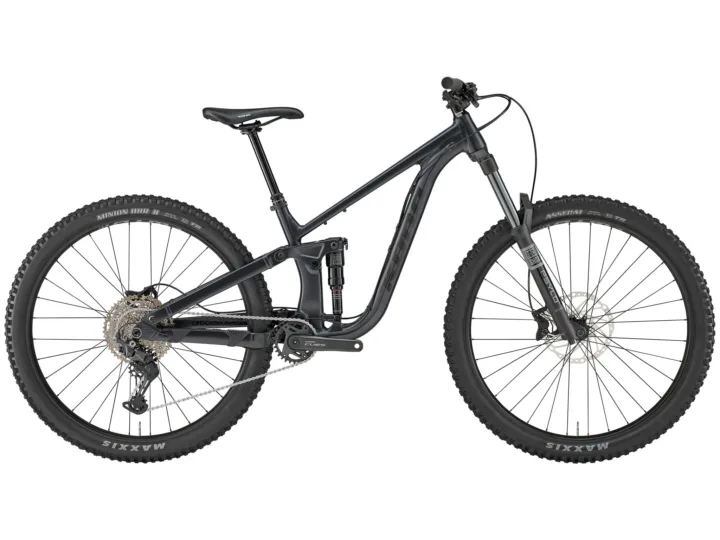
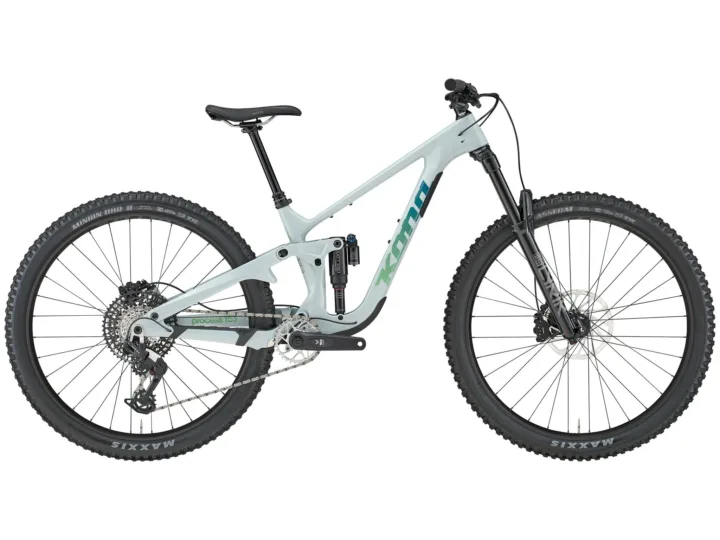
Kona separates its full-suspension mountain bikes primarily by travel and purpose. The tenth-generation Hei Hei uses 120 mm of rear travel and occupies the cross-country and light-trail end of the range. Process models move progressively toward rougher terrain, from the general-purpose Process 134 through longer-travel Process 153 and Process X configurations.
The differences extend beyond suspension travel. Frame material, wheel format, geometry, shock size, linkage hardware, and equipment can change between models and generations. Current collection pages may show newer Process bikes beside discounted G2 versions. A replacement link, axle, hanger, bearing kit, or shock must therefore be matched to the exact frame rather than ordered by the Process name alone.
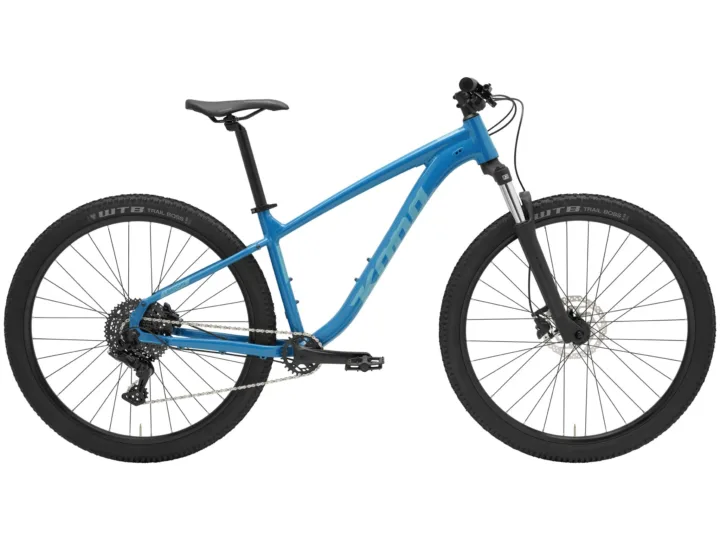
Kona’s hardtails cover an equally wide spectrum. Entry-level models such as the Fire Mountain and Lava Dome use wheel sizes that change with frame size, giving smaller riders 26- or 27.5-inch wheels while larger sizes use 29-inch wheels. The Honzo family is substantially more trail-oriented, and the Honzo ESD uses geometry intended for especially steep and technical riding.
The rigid steel Unit and Unity serve riders who want simplicity, large tires, and cargo capacity. The Unity is particularly specialized: it uses a 29-inch front wheel, 27.5-inch rear wheel, three-inch tires, adjustable chainstay length, and an integrated front rack. Those features suit loaded off-road travel but also create wheel, tire, rack, and handling considerations that do not apply to a conventional 29er.
Kona’s drop-bar range is better understood as several distinct categories rather than one gravel family.
The Rove is the accessible all-road and gravel platform, offered with steel or aluminum frames. The redesigned generation borrows geometry from Kona’s more performance-oriented gravel bikes while retaining relatively conventional equipment and 700 × 40 mm tires.
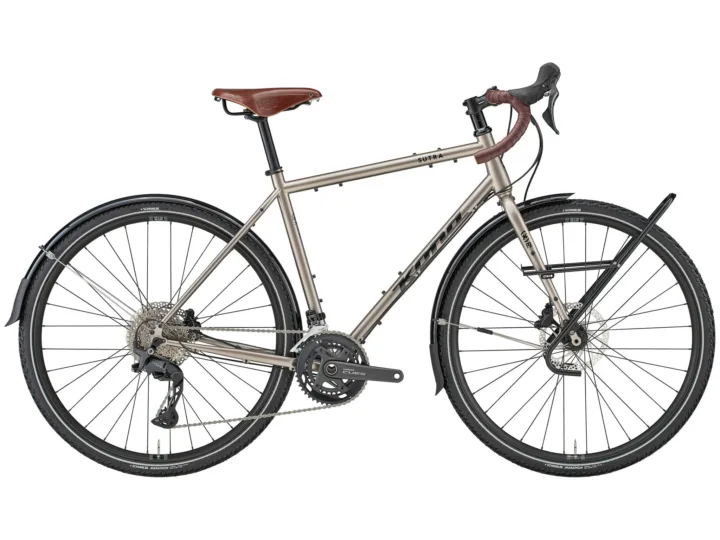
Libre models are aimed more toward faster gravel and long-distance riding. The steel Sutra remains the traditional touring choice, with geometry and equipment intended for carrying luggage over long distances.
The Ouroboros moves much closer to mountain-bike territory. Depending on the build, it combines 700 × 50 mm tires, a dropper post, wide flared handlebars, low gearing, and a 40 mm suspension fork. Carbon and aluminum versions are available, but their forks, drivetrains, wheel components, and frame details differ.
The steel LBF goes further still, using a 100 mm mountain-bike suspension fork, Boost-width hubs, 29 × 2.4-inch tires, a dropper post, and four-piston brakes. It may have drop handlebars, but its fit, replacement parts, and intended terrain are much closer to a rigid or short-travel mountain bike than to a typical gravel racer.
Choose the bike around actual use rather than Kona’s broad category labels. A Rove, Ouroboros, and LBF can all be ridden on unpaved roads, but they differ greatly in riding position, weight, tire size, suspension, gearing, and efficiency on pavement. The same applies to a Hei Hei, Process 134, and Process 153 on the mountain side.
Compare the complete geometry table rather than relying on the nominal size. Kona uses both centimeter and alpha sizing, changes wheel diameter on some hardtails according to frame size, and occasionally uses mixed-wheel designs. Stack, reach, standover height, wheelbase, handlebar dimensions, and dropper-post travel all deserve attention.
Identify the model generation before buying replacement parts or evaluating a used bike. Kona has reused names such as Process, Hei Hei, Honzo, Rove, Sutra, and Remote across numerous frame designs. Its current website also mixes newer 37e products with 36e models and remaining older inventory. The company’s historical archive is useful for establishing the original year and specification.
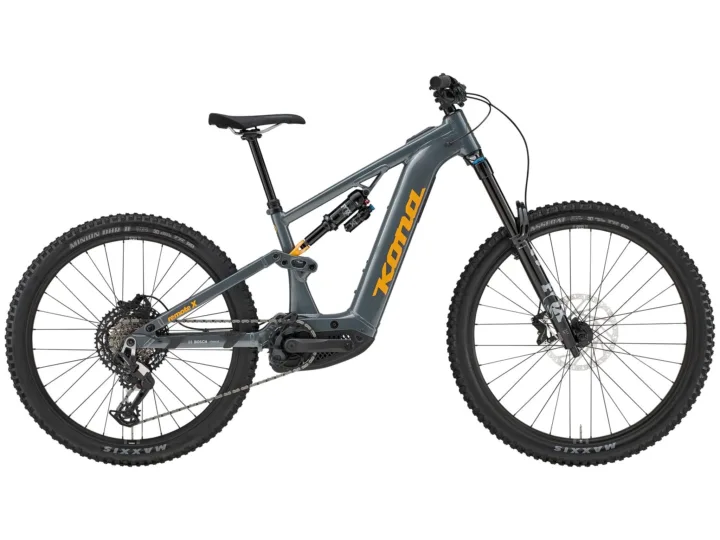
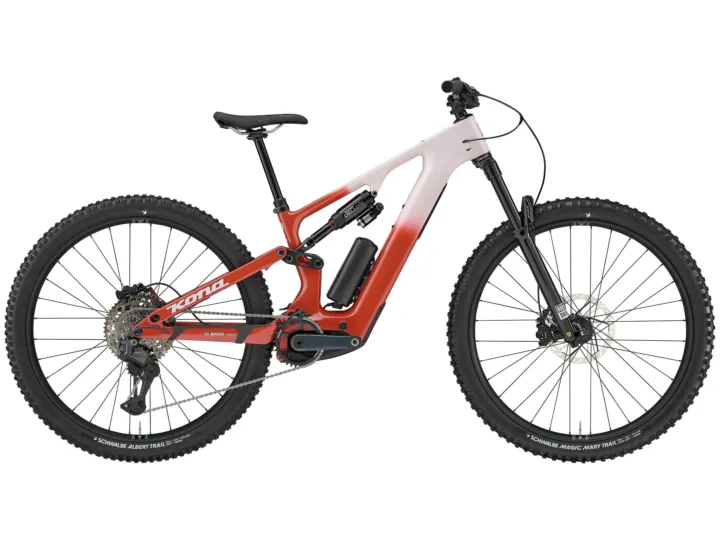
Electric-bike systems require the same care. Newer Remote 160 and Remote X models use Bosch equipment, while previous Remote generations have used Shimano systems. The El Kahuna and urban e-bike families may use still different motors, batteries, displays, and chargers. Confirm the exact drive system and nearby diagnostic support rather than shopping by the Remote or Dew name alone.
Kona now offers Kona Ride Online for eligible bicycles. An online order is shipped to the selected Kona dealer for assembly and pickup; complete bicycles are not shipped directly to a customer’s home. Some products remain marked for dealer contact rather than immediate online availability, so local selection may differ from what appears in the national catalog.
For a used Kona, record the serial number and exact model year, then inspect the suspension pivots, shock hardware, derailleur hanger, frame protection, and any model-specific axles or dropouts. Original purchase documents are particularly valuable because warranty and crash-replacement support are tied to the original owner and authorized-dealer process.
Kona will appeal most to riders who want a mountain or adventure bike with a clearly defined personality rather than a generic platform. Its strongest choices include progressive trail bikes, steel touring and bikepacking models, and unusually capable drop-bar bikes. Riders seeking a lightweight road racer, completely standardized components, or a simple consumer-direct purchase may find another brand easier to navigate.
Historical specifications