
Velopedia Bicycle Archive
Compare Bicycles
Compare published geometry, gearing and specifications for up to three bicycles.
Edit comparison
Add a bicycle
Search the Archive without leaving this comparison.
1 of 2 bicycles
At a glance
Key differences
Supported differences are shown below. Data limitations are labeled separately.
- Frame geometry
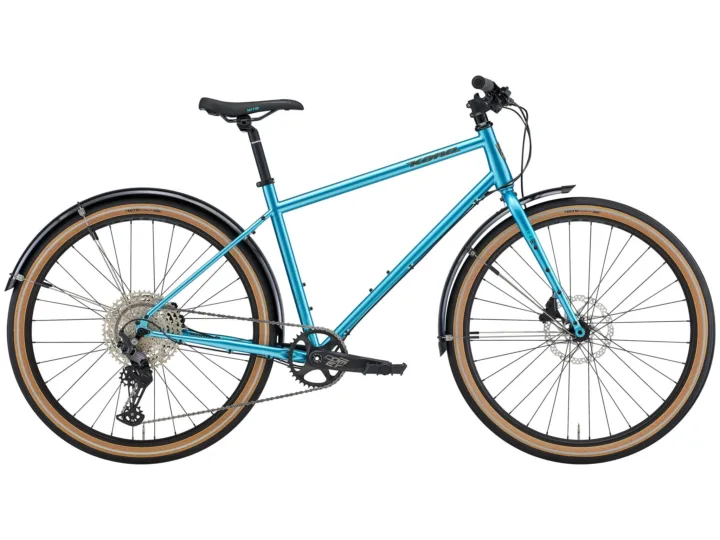
2023 Kona Dr Dew has 10 mm more stack than 2026 Kona Dr Dew in the selected sizes.
More stack places the frame reference higher, not necessarily the handlebar.
- Handling
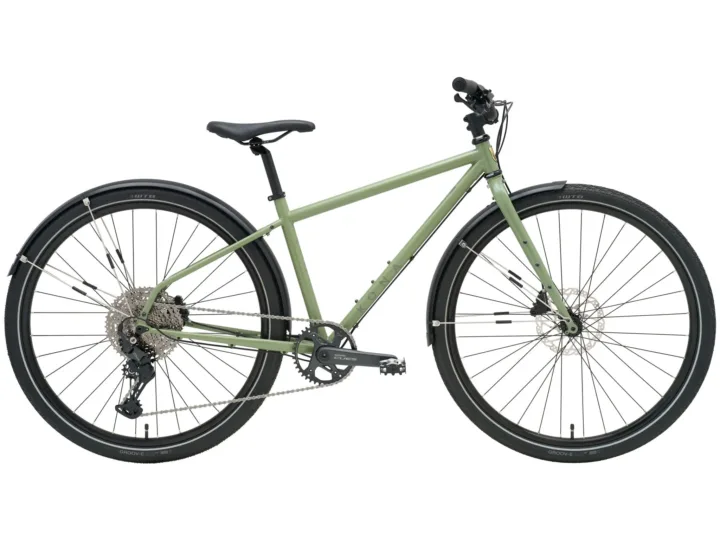
2026 Kona Dr Dew has a 1.0° slacker head-tube angle than 2023 Kona Dr Dew in the selected sizes.
Fork offset, tire size and wheelbase also affect steering; head angle alone is not a handling verdict.
- Gearing
2023 Kona Dr Dew has a 5% lower climbing ratio than 2026 Kona Dr Dew.
A lower ratio gives more mechanical advantage; rear-wheel rollout determines distance per crank turn.
- Identity & price
2026 Kona Dr Dew had an original MSRP $200 lower than 2023 Kona Dr Dew.
Original MSRP is the published list price when new, not today’s used-bike value.
Selected-size geometry
Geometry overlay
Frames share one scale and a bottom-bracket alignment. Size labels differ by brand; schematic drawing aids are identified below.
Gearing comparison
Lower gears help on climbs. Higher gears suit higher speeds.
RPM
RPM = pedal turns per minute.
Lowest0.76:1Highest3.45:1Total range455%
Speed unavailable: wheel or tire size is missing or unclear.
Lowest0.80:1Highest3.64:1Total range455%
Estimated speed at 90 RPMLowest gearHighest gear
Rear tire: 29×2.
How it works
Ratio = front teeth ÷ rear teeth. Hub gears also include the hub’s internal ratio. A 400% range means the highest ratio is four times the lowest.
Speeds are estimates from tire size and pedal cadence. Actual speeds vary.
Complete specification tableShows different published values and gaps where a bicycle lacks data. Different wording reflects source language, not necessarily different components. Swipe for more columns.
Specification
2023 Kona Dr Dew
2026 Kona Dr Dew
Overview
Model Year
2023
2026
Brand
Kona
Kona
Model
Dr Dew
Dr Dew
Bicycle Type
City/Commuter
City/Commuter
Original MSRP
$1,299.00
$1,099.00
Colors
Blue
Satin Algae w/ Aspen Decals
Sizes
S, M, L, XL
S, M, L, XL
Weight
—
—
Frameset
Frame Construction
Kona Cromoly Butted
Kona Butted Cromoly
Fork
Kona Project Two Cromoly Disc 180
Kona Cromoly
Drivetrain
Shifters
SRAM NX-Eagle
—
Rear Derailleur
SRAM NX-Eagle
Shimano CUES 6000
Crankset
FSA Comet Modular; Chainring: 38t
Shimano CUES 6000 40t / S-M 170mm / L-XL 175mm
Bottom Bracket
FSA Road Mega EXO 68mm
Shimano BSA 73mm
Cassette
SRAM SX-Eagle 11-50t 12spd
Shimano CUES 4000 11-50t 11spd
Chain
SRAM SX-Eagle
Shimano CUES LG500
Pedals
Kona JS2
Feimin Platform
Brakes
Brakes
Brake Calipers: Shimano Altus Flat mount; Front Brake Rotor: Shimano RT54 180mm (centerlock); Rear Brake Rotor: Shimano RT54 180mm (centerlock); Brake Levers: Shimano Altus
Brake Calipers: Shimano ALTUS; Front Brake Rotor: Shimano 180mm Centerlock; Rear Brake Rotor: Shimano 180mm Centerlock; Brake Levers: Shimano ALTUS
Cockpit & Contact Points
Headset
FSA No.1/No.10
FSA Orbit No.1 EC34/EC34
Handlebar
Kona Aluminum Riser
Kona Back 10º / Up 6º / Rise 70mm / Width 700mm
Stem
Kona Commuter
Kona 31.8mm / Rise 3º / Length 45mm
Saddle
WTB Volt
Kona Commuter
Seatpost
Kona Thumb w/Offset 27.2mm
Kona w/Offset 27.2mm / 375mm
Wheels & Tires
Hubs
(F) Formula 100x12mm (centerlock) / (R) Formula 142x12mm (centerlock)
(F) Shimano 12x100mm / (R) Shimano 12x142mm
Rims
WTB ST I23 TCS 2.0
Double Wall Aluminum
Spokes
Stainless Black 14g
Stainless 2.0mm Black
Front Tire
WTB Horizon Road Plus Comp w/ Puncture Protection 650x47c
WTB Groov-E 29x2.0"
Rear Tire
WTB Horizon Road Plus Comp w/ Puncture Protection 650x47c
WTB Groov-E 29x2.0"
Wheel Size
—
29"
Geometry · choose a size for each bicycle
Geometry size
Reach
430 mm
430 mm
Stack
587 mm
577 mm
Head-tube angle
70°
69°
Seat-tube angle
74°
73°
Seat tube
470 mm
470 mm
Head tube
155 mm
120 mm
Chainstay / rear center
450 mm
470 mm
Wheelbase
1116 mm
1143 mm
Bottom-bracket drop
70 mm
70 mm
Bottom-bracket height
272 mm
295 mm
Standover height
728 mm
754 mm
Fork offset / rake
50 mm
50 mm
Front center
675 mm
682 mm
Historical specifications are presented as an archival reference. Components may have varied by market, size, or production run.