
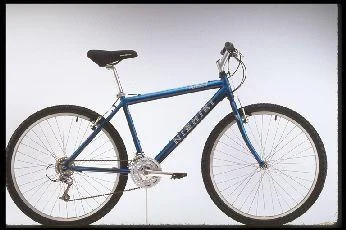
- Frame
- 7005 aluminum w/replaceable derailleur hanger
- Groupset
- Mountain Mix
Velopedia Bicycle Archive
Compare Bicycles
Compare published geometry, gearing and specifications for up to three bicycles.
Edit comparison
Add a bicycle
Search the Archive without leaving this comparison.
1 of 2 bicycles
At a glance
Key differences
Supported differences are shown below. Data limitations are labeled separately.
- Gearing
1999 Nishiki Cascade has a 12% lower climbing ratio than 1998 Nishiki Cascade.
A lower ratio gives more mechanical advantage; rear-wheel rollout determines distance per crank turn.
- Identity & price
1998 Nishiki Cascade had an original MSRP $110 lower than 1999 Nishiki Cascade.
Original MSRP is the published list price when new, not today’s used-bike value.
Gearing comparison
Lower gears help on climbs. Higher gears suit higher speeds.
RPM
RPM = pedal turns per minute.
Lowest0.69:1Highest4.00:1Total range582%
Estimated speed at 90 RPMLowest gearHighest gear
Uses front tire 26×2.1; rear size isn’t listed.
Lowest0.79:1Highest3.50:1Total range445%
Estimated speed at 90 RPMLowest gearHighest gear
Uses front tire 26×2.1; rear size isn’t listed.
How it works
Ratio = front teeth ÷ rear teeth. Hub gears also include the hub’s internal ratio. A 400% range means the highest ratio is four times the lowest.
Speeds are estimates from tire size and pedal cadence. Actual speeds vary.
Complete specification tableShows different published values and gaps where a bicycle lacks data. Different wording reflects source language, not necessarily different components. Swipe for more columns.
Specification
1999 Nishiki Cascade
1998 Nishiki Cascade
Overview
Model Year
1999
1998
Brand
Nishiki
Nishiki
Model
Cascade
Cascade
Bicycle Type
Mountain bike, front suspension
Mountain bike, front suspension
Original MSRP
$759.99
$649.99
Colors
02 Blue
Competition Black
Sizes
16", 18", 20", 22"
16", 18", 20", 22"
Weight
26.2 lb
26.75 lb
Frameset
Frame Construction
TIG-welded
TIG-welded
Frame Material
7005 aluminum w/replaceable derailleur hanger
7005 aluminum
Fork
Answer Manitou Spyder R, 3.15" travel
Rock Shox Indy C
Fork Material
Aluminum/magnesium, triple-clamp crown
Aluminum/magnesium, triple-clamp crown
Drivetrain
Component Group
Mountain Mix
Shimano STX-RC
Shifters
Shimano Alivio RapidFire SL
Shimano STX-RC RapidFire SL
Front Derailleur
Shimano Deore LX top-swing, top-pull/clamp-on 31.8mm
Shimano STX top-swing, top-pull/clamp-on 31.8mm
Rear Derailleur
Shimano Deore XT SGS
Shimano STX-RC
Crankset
Shimano Deore LX, 22/32/44 teeth
Sugino Impel 300B, 22/32/42 teeth
Bottom Bracket
Shimano BB-LP27, 110.5mm spindle
Shimano BB-LP27, 110.5mm spindle
BB Shell Width
68mm English
68mm English
Rear Cogs
9-speed, 11 - 32 teeth
8-speed, 12 - 28 teeth
Chain
Shimano CN-HG72, 1/2 x 3/32"
KMC SS-82, 1/2 x 3/32"
Pedals
Wellgo WPD-813 clipless
Aluminum w/clips & straps
Brakes
Brakes
Avid SD-10 brakes, Avid AD-1.0 L levers
Shimano STX-RC V-Brake brakes, Tektro RBP-375A levers
Cockpit & Contact Points
Headset
1 1/8" threadless Tange-Seiki RBC-2
1 1/8" threadless Tange-Seiki RBC-2
Handlebar
Titec Enduro HF
Aluminum, butted
Handlebar Extensions
TIG alloy
Aluminum, ski bend
Stem
Kalloy aluminum
Aluminum
Saddle
WTB SST, hollow chromoly rails
Selle Stratos Hyper Comp
Seatpost
Aluminum micro-adjust, 27.2mm diameter
Aluminum micro-adjust, 27.2mm diameter
Wheels & Tires
Hubs
Front: Shimano Deore LX suspension, Rear: Shimano Deore LX
Shimano STX-RC
Rims
Weinmann Zac 19, 36-hole
Weinmann Zac 19, 32-hole
Spokes
Chung Nan stainless steel, 2.0mm straight gauge
Chung Nan stainless steel, 1.8mm straight gauge
Spoke Nipples
Brass nipples
Brass nipples
Front Tire
26 x 2.10" IRC Mythos XC
26 x 2.10" IRC Mythos XC
Wheel Size
26" wheels
26" wheels
Geometry · choose a size for each bicycle
Geometry size
Head-tube angle
71°
71°
Seat-tube angle
73°
73°
Chainstay / rear center
425.4 mm
425.4 mm
Wheelbase
1051.6 mm
1056.6 mm
Fork offset / rake
33 mm
40.6 mm
Historical specifications are presented as an archival reference. Components may have varied by market, size, or production run. Legacy reference geometry is model-level historical data whose corresponding frame size is not identified; compare those dimensions as reference values rather than size-normalized fit data.