
Velopedia Bicycle Archive
Compare Bicycles
Compare published geometry, gearing and specifications for up to three bicycles.

Edit comparison
Add a bicycle
Search the Archive without leaving this comparison.
1 of 2 bicycles
At a glance
Key differences
Supported differences are shown below. Data limitations are labeled separately.
- Identity & price
These bicycles are categorized differently: 1997 Specialized Sirrus is Road; 2003 Specialized Sirrus is Hybrid.
- Data limitation
No geometry is recorded for 1997 Specialized Sirrus.
- Gearing
2003 Specialized Sirrus has a 14% lower climbing ratio than 1997 Specialized Sirrus.
A lower ratio gives more mechanical advantage; rear-wheel rollout determines distance per crank turn.
- Identity & price
2003 Specialized Sirrus had an original MSRP $250 lower than 1997 Specialized Sirrus.
Original MSRP is the published list price when new, not today’s used-bike value.
Gearing comparison
Lower gears help on climbs. Higher gears suit higher speeds.
RPM
RPM = pedal turns per minute.
Lowest1.08:1Highest4.18:1Total range386%
Estimated speed at 90 RPMLowest gearHighest gear
Uses front tire 700C×23; rear size isn’t listed.
Lowest0.93:1Highest4.36:1Total range468%
Estimated speed at 90 RPMLowest gearHighest gear
Uses front tire 700C×38; rear size isn’t listed.
How it works
Ratio = front teeth ÷ rear teeth. Hub gears also include the hub’s internal ratio. A 400% range means the highest ratio is four times the lowest.
Speeds are estimates from tire size and pedal cadence. Actual speeds vary.
Complete specification tableShows different published values and gaps where a bicycle lacks data. Different wording reflects source language, not necessarily different components. Swipe for more columns.
Specification
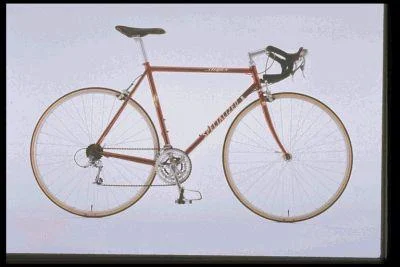
1997 Specialized Sirrus
2003 Specialized Sirrus
Overview
Model Year
1997
2003
Brand
Specialized
Specialized
Model
Sirrus
Sirrus
Bicycle Type
Road/sport
Hybrid
Original MSRP
$749.99
$500.00
Colors
Red
Pearl White
Sizes
46 cm, 50 cm, 52 cm, 54 cm, 56 cm, 58 cm, 60 cm, 62 cm
47cm, 51cm, 54cm, 57cm, 61cm
Weight
—
—
Frameset
Frame Construction
TIG-welded
TIG-welded
Frame Material
Chromoly, double-butted
Specialized A1 aluminum
Fork
Sbc
Specialized
Fork Material
Chromoly, unicrown crown
Chromoly, unicrown crown
Drivetrain
Component Group
Shimano RSX
Hybrid Mix
Shifters
Shimano RSX STI Dual Control
Shimano ST-EF35 EZ Fire STI
Front Derailleur
Shimano RSX top-swing, bottom-pull/clamp-on 28.6 mm
Shimano FC-T301, bottom-pull/clamp-on 31.8mm
Rear Derailleur
Shimano RSX GS
Shimano Sora
Crankset
Shimano RSX, 26/36/46 teeth
Specialized Sirrus, 28/38/48 teeth
Bottom Bracket
Shimano
Tien Hsin cartridge, 113mm spindle
BB Shell Width
68mm English
68mm English
Rear Cogs
7-speed, 11 - 24 teeth
8-speed, 11 - 30 teeth
Chain
Shimano, 1/2 x 3/32"
Shimano CN-HG50, 1/2 x 3/32"
Pedals
Aluminum cage w/clips & straps
Specialized aluminum platform
Brakes
Brakes
Shimano RSX Dual Pivot brakes, Shimano RSX levers
Aluminum linear-pull brakes, Shimano ST-EF35 EZ Fire STI levers
Cockpit & Contact Points
Headset
1"
1 1/8" threadless Ritchey Logic
Handlebar
Sr
Specialized aluminum
Handlebar Extensions
—
Not included
Stem
SBC chromoly
Specialized aluminum
Saddle
Specialized Prolong Evolution Carbotech
Specialized Body Geometry Milano Comfort Max
Seatpost
Aluminum micro-adjust, 27.2 mm diameter
Kalloy SP-245 suspension, 27.2mm diameter
Wheels & Tires
Hubs
Shimano RSX
Aluminum, Q/R
Rims
Araya RT-520, 32-hole
Alex aluminum, 32-hole
Spokes
Stainless steel, 2.0mm straight gauge
Stainless steel, 14ga. (2.0mm) straight gauge
Spoke Nipples
Brass nipples
Brass nipples
Front Tire
700 x 23c Specialized Transition
700 x 38c Specialized Nimbus EX
Wheel Size
700c wheels
700c wheels
Geometry · choose a size for each bicycle
Geometry size
—
Head-tube angle
—
72°
Seat-tube angle
—
74°
Chainstay / rear center
—
425 mm
Wheelbase
—
1016 mm
Fork offset / rake
—
46 mm
Historical specifications are presented as an archival reference. Components may have varied by market, size, or production run. Legacy reference geometry is model-level historical data whose corresponding frame size is not identified; compare those dimensions as reference values rather than size-normalized fit data.