2026
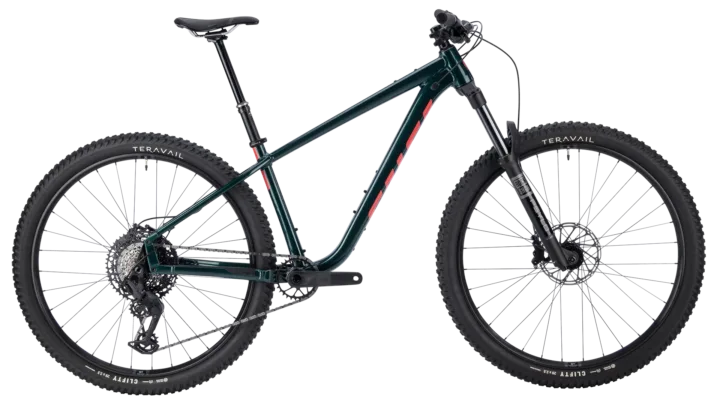
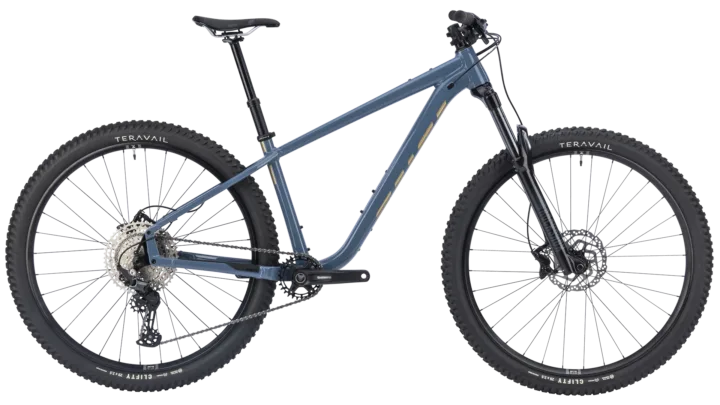
Timberjack Deore 12 29
Original MSRP $1,799.00
Velopedia Brand Reference
Salsa Cycles was founded in California in the early 1980s by framebuilder Ross Shafer. The company works with aluminum, carbon fiber, steel, and titanium rather than building its identity around one frame material.
Velopedia Bicycle Archive
Model years 2007–2026
Company overview
Salsa is an adventure-focused bicycle and component brand with a range extending well beyond gravel bikes. Its current catalog includes drop-bar bikepacking machines, gravel race bikes, hardtails, full-suspension mountain bikes, fat bikes, and electric gravel and mountain models.
The company works with aluminum, carbon fiber, steel, and titanium rather than building its identity around one frame material. Riders might consider Salsa for long-distance riding, racing, or backcountry travel where carrying equipment matters, but the bikes are generally more purpose-specific than their numerous mounts initially suggest. A Warbird, Fargo, and Blackthorn may all accommodate gear, yet they provide very different fit and handling.
Salsa sells complete bikes at several component levels, along with framesets for selected models.
Salsa’s shared theme is carrying equipment without making every bicycle a traditional touring bike. Frame and fork mounts appear throughout the range, including on gravel race and full-suspension models. Depending on the bike, these may hold bottles, repair tools, top-tube bags, racks, or larger bikepacking systems.
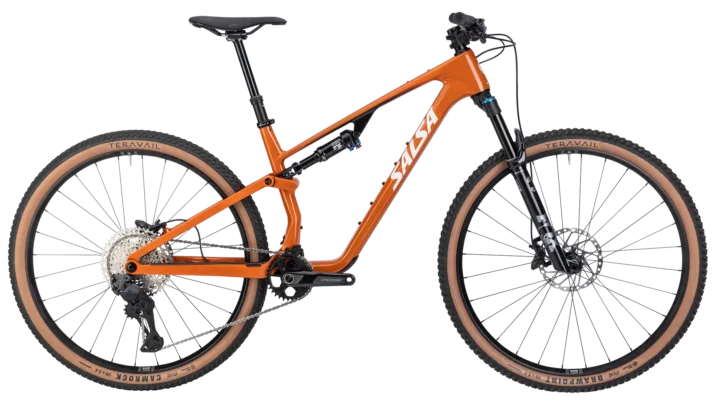
The execution changes with the intended use. Warbird uses Salsa’s Class 5 VRS frame design to introduce compliance into a carbon gravel-race platform. Cutthroat combines drop bars with mountain-bike-influenced geometry and substantial cargo capacity. Fargo prioritizes loaded mixed-terrain travel, while Spearfish and Blackthorn use Split Pivot suspension tuned for different amounts of travel and different trail objectives.
Alternator dropouts are another recurring feature. Depending on the version, they can adjust chainstay length, tension a singlespeed chain, or support different drivetrain and hub arrangements. This creates useful build options, but it also introduces model-specific hardware. Alternator 1.0, 1.5, 2.0, and Fit Mount parts should not be assumed to interchange.
Salsa’s breadth is a strength, although it can make the range difficult to understand without studying geometry and specifications. The brand covers relatively accessible aluminum bikes and expensive carbon, titanium, electronic-shifting, and electric configurations. Similar model names may therefore represent substantially different investments and service requirements.
Choose by riding position and terrain before choosing frame material. Salsa uses centimeter sizing on many drop-bar bikes and alpha sizing on mountain and bikepacking models. Reach, stack, standover height, wheelbase, and handlebar position cannot be compared reliably by the size label alone. A dealer-assisted test ride is particularly valuable when deciding between Fargo’s upright off-road fit, Cutthroat’s long-distance position, and the lower posture of a gravel race bike.
Check the exact model year before ordering replacement parts. Derailleur hangers, swing plates, thru-axles, suspension links, shock sizes, forks, and frame hardware can be specific to one frame generation. Travel conversions on compatible full-suspension models require the prescribed shock, link, fork length, and setup rather than a simple adjustment.
The 32-inch Fargo is an unusual option for riders interested in the rollover characteristics of larger wheels, but rims, tires, tubes, and emergency replacements are less widely available than equivalent 29-inch parts. That supply question deserves consideration before remote travel.
Electric-bike buyers should confirm the motor system, battery capacity, assist class, charging equipment, and local diagnostic support. Salsa currently uses both hub-drive and mid-drive systems, so ownership and service needs differ between models.
Current product pages combine direct online ordering for selected bikes and frames with a local retailer locator. A frameset purchase can enable a highly specific build, but wheels, drivetrain, cockpit parts, luggage, and professional assembly can make it more expensive than a comparable complete bike.
Salsa is best suited to riders who want a bike designed around gravel, bikepacking, endurance racing, trail exploration, or self-supported travel. Someone seeking a basic commuter, lightweight road-racing specialist, or simple bicycle with few model-specific parts may find a narrower brand easier to shop and maintain.
Historical specifications