2027
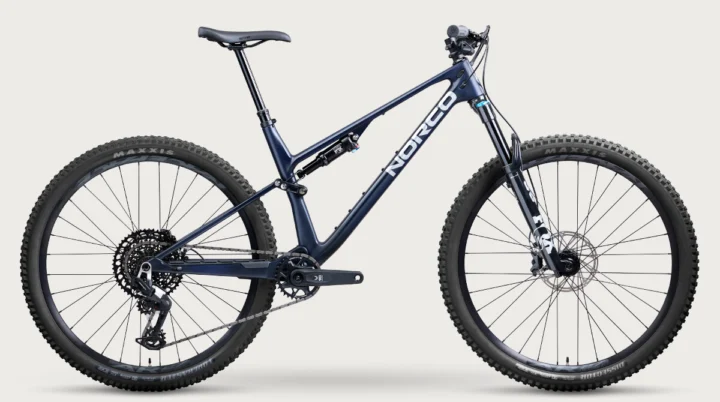
Charger A2
Original MSRP $1,249.00
Velopedia Brand Reference
Few brands represent the balance of innovation, durability, and everyday rideability like Norco Bicycles.
Velopedia Bicycle Archive
Model years 1993–2027
Company overview
Norco is a Canadian bicycle brand founded in British Columbia in 1964. Its catalog has changed considerably over six decades, but mountain bikes remain the center of the company’s identity. Norco also produces gravel, urban, fat, dirt-jump, youth, and electric mountain bikes, giving it a broader range than brands devoted only to high-end trail or gravity equipment.
The bikes are designed and tested in Canada, with the terrain of British Columbia influencing much of the mountain-bike development. That does not mean every Norco frame or complete bicycle is manufactured in Canada. Frame material, suspension layout, wheel configuration, and component compatibility vary by model and generation, so the family name alone is rarely enough information for parts selection or used-bike evaluation.
Norco’s current and recent catalog includes bicycles for recreational riding through professional-level mountain-bike competition.
Norco often carries more than one generation of a family at the same time. Sale bikes, current models, and upcoming model-year products may appear together on the website, making the exact year and generation important.
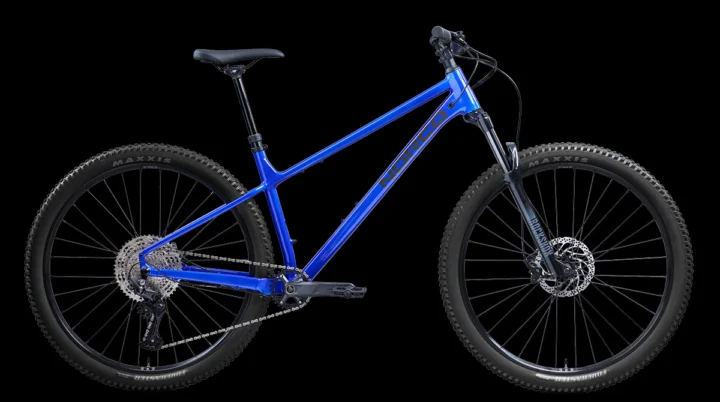
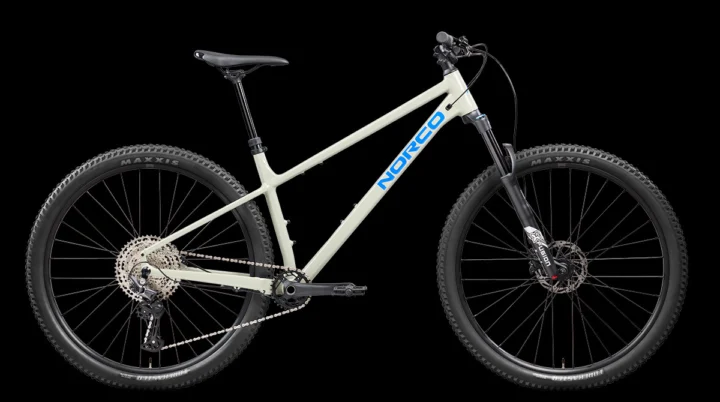
Norco’s mountain-bike families are not simply a good-better-best progression. Storm and Charger models are hardtails intended for recreational off-road riding and riders moving beyond basic path use. Fluid HT is more trail-oriented, while Torrent hardtails use more aggressive geometry and heavier-duty equipment for demanding terrain.
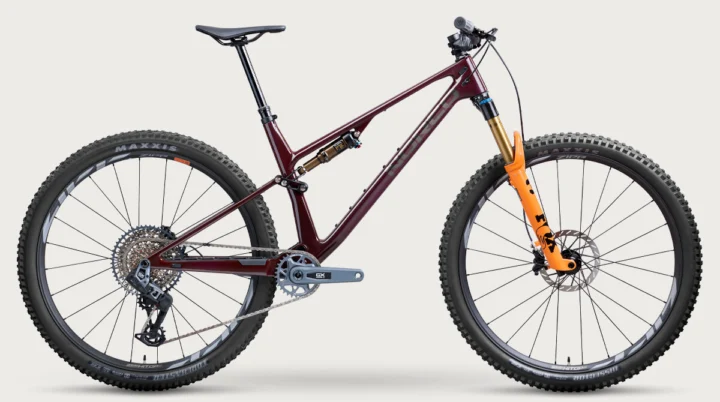
Fluid FS is the broad trail platform. It has appeared in aluminum and carbon versions and is designed around balanced climbing and descending rather than a narrow racing purpose. Optic is a shorter-travel performance trail bike, while Sight adds travel and stability for rougher all-mountain riding. Some Sight generations can use either a 29-inch rear wheel or a 27.5-inch rear wheel, but the conversion requires the correct Norco link and shock-mount hardware. Installing a smaller wheel alone will alter geometry and handling.
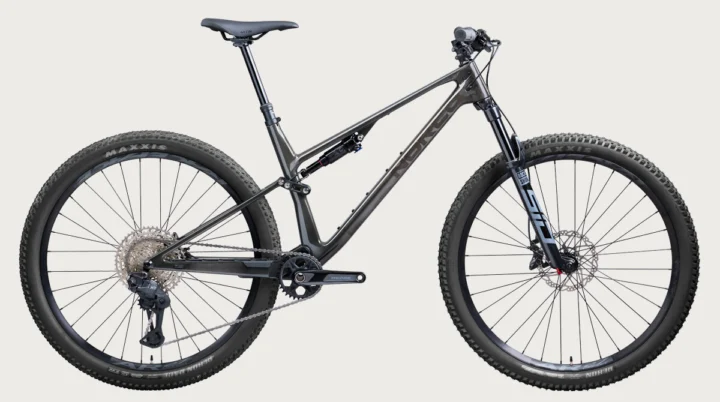
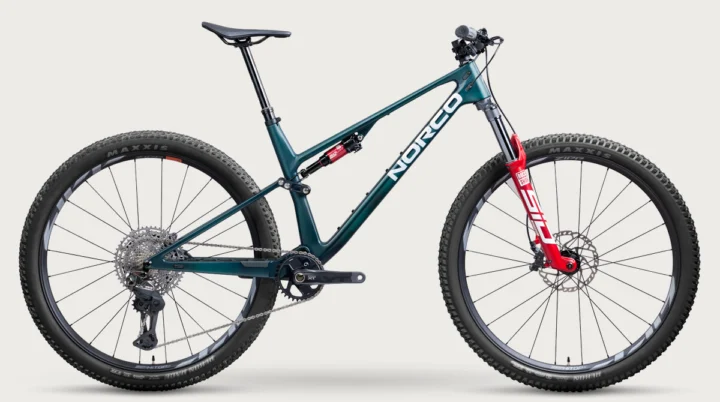
Range models are intended for enduro riding, where descending capability receives greater priority but the bicycle must still be pedaled between stages. Torrent DH is a dedicated downhill and bike-park platform with long travel, mixed wheels, and equipment selected for repeated lift-served use. Revolver models cover cross-country racing and fast technical trail riding, with 120 and 130 designations distinguishing their intended fork and rear-travel configurations.
Travel numbers should not be used as the only comparison. Two bikes with similar suspension travel may have different axle paths, wheel sizes, shock tunes, frame weights, rider positions, and braking or drivetrain equipment. Norco also changes rear-center length, seat angle, cockpit recommendations, and other dimensions across sizes on many models. Compare the complete geometry chart rather than assuming that the same labeled size will fit like another Norco or another brand.
Ride Aligned is Norco’s combined design and setup system. On supported models, an online guide uses rider height, weight, body proportions, experience, terrain, and preferences to recommend a frame size and provide starting points for cockpit position, suspension pressure, damping, and tire pressure.
These recommendations are useful baselines rather than fixed specifications. Tire construction, rim width, riding speed, trail surface, carried equipment, and personal preference can all require changes. Suspension settings should be recorded before experimenting so the rider can return to a known setup.
Norco uses more than one rear-suspension design. Its standard VPS layout is a Horst-link-based system with the rear axle and brake mounted to the seatstay. VPS HP models add a high main pivot and an idler pulley, creating a more rearward axle path intended to help the wheel move over square-edged impacts. Current Revolver frames instead use a flex-pivot design that reduces weight and hardware for cross-country use.
Each arrangement has different service requirements. Conventional VPS systems require inspection of pivot bearings, axles, link hardware, and shock bushings. High-pivot systems add an idler pulley, another bearing, and additional chain-management considerations. Idler wear, alignment, chain length, and chainring size can affect noise and drivetrain performance.
Replacement shocks must match more than eye-to-eye length and stroke. Confirm mounting style, hardware width, available frame clearance, air-can or coil-spring clearance, and the tune intended for that frame. Norco advises against changing original suspension travel because it can alter geometry, create frame or component contact, and affect warranty consideration. Assembly documents supplied on many product pages are the safest reference for bearings, torque values, link orientation, and hardware order.
VLT identifies an electric Norco, but it does not identify one motor or battery platform. Earlier VLT generations commonly used Shimano drive systems, while current families include Bosch and TQ equipment. Fluid VLT generally addresses lighter trail use, Sight VLT covers all-mountain riding, and Range VLT moves toward full-power enduro applications.
The complete model name and year are essential. A Sight VLT may use a different motor, battery, display, charger, wiring harness, wheel configuration, and suspension layout from another Sight VLT. Battery capacities and whether the battery is removable also vary. Do not order a charger, control unit, speed sensor, battery cover, or wiring component from the family name alone.
Motor service normally follows the drive-system manufacturer’s diagnostic and warranty process. Frame-specific batteries, covers, mounts, wiring routes, skid plates, and charge-port pieces may still require Norco or distributor support. Before buying a used VLT, confirm that the original charger is present, check for stored diagnostic errors, inspect the motor and battery mounting areas, and ask an authorized service provider to evaluate battery condition when practical.
Battery range claims cannot be compared without considering battery capacity, rider output, assist mode, total system weight, elevation, temperature, tire choice, and trail conditions. A larger battery may increase available range but also changes bicycle weight and handling. Firmware updates can alter available settings or motor behavior, so the current software version should be documented before troubleshooting a performance complaint.
Search is Norco’s primary gravel family and is available in carbon and aluminum forms. Current generations use wider tire clearance and multiple cargo or fender mounts, but the exact build determines drivetrain type, wheel compatibility, and installed tire size. Fork and frame bosses still have specific load limits; the presence of a mounting point does not automatically approve it for a large cargo cage or heavily loaded rack.
Scene is an upright, step-through urban bike, while XFR combines a more conventional hybrid position with wider tires and a suspension fork for mixed surfaces. These models are simpler than Norco’s mountain bikes, but buyers should still verify rack and fender mounts, tire clearance, brake type, axle standard, and gearing. Bigfoot fat bikes add wide hubs, rims, tires, and cold-weather considerations that are not interchangeable with normal mountain-bike equipment.
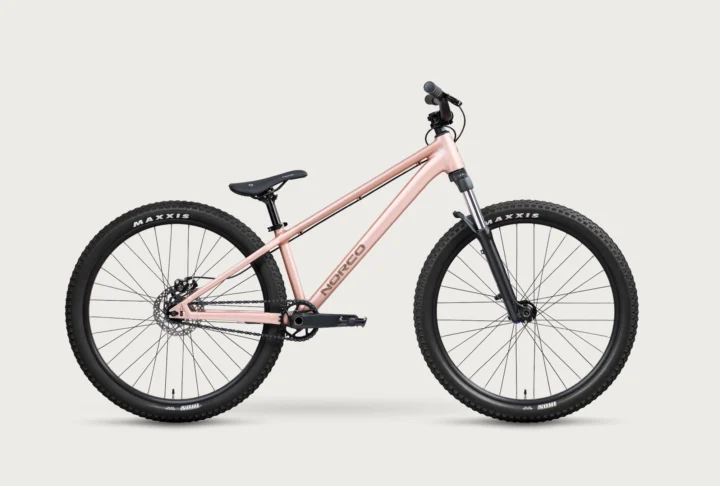
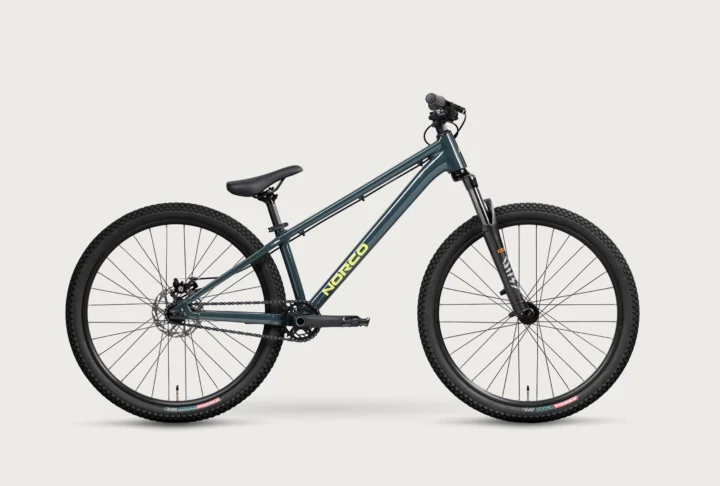
Norco’s youth range includes more than inexpensive small-wheel bikes. Fluid FS Youth models use youth-tuned suspension, shorter cranks, smaller contact points, and proportionate geometry. Rampage Youth models are intended for dirt jumping rather than general neighborhood riding. Wheel size alone does not determine fit; standover height, reach, brake-lever reach, crank length, gearing, and total bicycle weight are all important for a young rider.
Identify the complete model name, model year, generation, frame material, size, and wheel configuration. Norco frequently reuses family names while changing suspension layout, geometry, cable routing, shock dimensions, and drivetrain standards. The serial number and original sales documentation can help establish the correct year, but they should be compared with official photographs and technical documents.
On a used full-suspension Norco, inspect the frame around pivot, shock, idler, motor, and linkage mounts. Check every pivot for play or binding and confirm that proprietary chips, links, axle hardware, and covers are present. Replacement hardware may remain available, but compatibility is typically generation-specific. High-pivot bikes should also be checked for idler wear, damaged guides, chain noise, and incorrect chain length.
Norco’s No Other Way limited-lifetime warranty covers qualifying frames, rigid forks, and full-suspension link arms from model year 2014 onward for the usable life of the product, with original proof of purchase. Suspension hardware and certain Norco-proprietary VLT electrical parts receive shorter coverage, while third-party motors, suspension, drivetrains, brakes, and wheels follow their manufacturers’ policies. Claims normally begin through an authorized Norco dealer, and transportation, labor, and parts made incompatible by a replacement-frame upgrade are not covered. The current wording does not clearly promise transferability, so secondhand buyers should not assume they inherit the original coverage.
Safety notices must be checked by exact year. All model-year 2027 Fluid Gen 3 A1, A2, and A3 bikes are currently subject to a stop-ride recall because the seat tube may fail under certain conditions. As of the August 2026 notice, Norco was still investigating and had not published a final remedy. Certain model-year 2025 Sight VLT CX bikes were also recalled because a rear-brake mounting insert could loosen. Affected bikes should not be ridden until the prescribed remedy has been completed and documented.
Norco is most likely to suit riders who want dealer-supported bicycles with extensive sizing, setup resources, and choices extending from recreational hardtails to highly specialized gravity and electric mountain bikes. The breadth of the range is an advantage, but it makes exact model identification especially important. Compatibility decisions should be based on the year-specific product page, assembly document, and frame specifications rather than the Norco family name alone.
Practical reference
Limited Lifetime Warranty
Norco Bicycles will repair or replace any frame or rigid fork it deems to be defective due to manufacturing, materials, and workmanship for all Norco Bicycle models year 2014 and newer with original proof of purchase. The limited lifetime frame warranty includes
Read the official warranty policy →
Warranty terms can vary by product, region, purchase date, and owner status. Confirm the current policy with the manufacturer.
Historical specifications