 Image not available
2015
ZW95
Original MSRP $929.00
Velopedia Brand Reference
Felt is a specialist bicycle company focused on road racing, triathlon, and gravel competition. Aerodynamics have played an unusually large role in its identity, particularly in the development of its road and triathlon platforms. The present catalog is considerably narrower than Felt’s historical range and is built almost entirely around high-end drop-bar bicycles.
Velopedia Bicycle Archive
Model years 2002–2015
Company overview
Felt is a specialist bicycle company focused on road racing, triathlon, and gravel competition. Aerodynamics have played an unusually large role in its identity, particularly in the development of its road and triathlon platforms. The present catalog is considerably narrower than Felt’s historical range and is built almost entirely around high-end drop-bar bicycles.
Within that range, the models have clearly separated purposes. Felt offers an aerodynamic road bike, a lighter climbing-oriented road platform, an endurance bike, a dedicated triathlon machine, and a gravel race bike. This makes the brand easier to understand than companies with dozens of overlapping families, but it also means there is little aimed at casual transportation, mountain biking, or riders seeking an inexpensive general-purpose bicycle.
Felt is most relevant to riders who already have a reasonably clear idea of their riding position and intended use. Several models use integrated cockpits, dedicated seatposts, internal routing, and other model-specific components, so fit and future service requirements deserve as much attention as the drivetrain level.
Felt’s current catalog concentrates on five primary platforms:
Complete bicycles are divided into build levels such as FRD, Pro, Expert, and Race. These labels indicate the model’s position within its family, but they do not represent identical component packages across the complete Felt range. The exact drivetrain, wheels, cockpit, carbon construction, and power-meter equipment must be checked on the individual product page.
Felt’s clearest distinction is between bicycles built for specific competitive disciplines. NEXAR combines aerodynamic shaping with a relatively modern road fit and clearance for tires up to 32 mm. FR places greater emphasis on low weight and traditional road-race handling. VR provides a less aggressive position and wider original tires for long road rides and mixed pavement.
The IA 2.0 is not simply a road bike fitted with aerobars. Its basebar, extensions, armrests, seatpost, cable routing, hydration, and storage pieces operate as a complete triathlon system. Proper selection depends on pad stack and reach, extension adjustment, saddle position, and the rider’s ability to maintain the position—not only the nominal frame size.
BREED is similarly specialized. The current generation is a gravel race bike rather than a heavily equipped touring bicycle. It offers large tire clearance, multiple bottle locations, aerodynamic frame shaping, and current 1× gravel drivetrains. Riders interested in racks, loaded travel, or maximum utility should verify mounting approval and load limits instead of assuming every visible frame boss is intended for cargo.
The tradeoff to this specialization is reduced flexibility. Integrated components can improve aerodynamics and create a clean front end, but changing stem length or handlebar width may require an entirely different cockpit, new hydraulic-hose work, and a brake bleed.
Fit should be established before choosing the build level. This is especially important on NEXAR, BREED, and IA 2.0 models with one-piece or highly integrated cockpits. Confirm the supplied bar width, stem length, spacer arrangement, crank length, seatpost adjustment, and availability of alternative cockpit sizes before purchase.
Replacement parts are another consideration. Drivetrain and brake wear parts generally come from the component manufacturer, while seatposts, wedges, headset covers, cable guides, storage pieces, hangers, and cockpit hardware may be specific to the frame generation. Frameset buyers should obtain an inventory of included small parts rather than assuming that every component shown on a complete bicycle is supplied.
Used Felt bicycles require exact identification. Names such as AR, FR, VR, IA, and BREED have been used across multiple generations with changing brake systems, cable routing, bottom brackets, axle standards, tire clearance, and proprietary parts. Felt’s older catalogs also included mountain, cyclocross, track, urban, and electric bicycles that are no longer part of the current range. Technical support and parts availability for those bikes can vary considerably by year.
Felt will make the most sense to a rider seeking a purpose-built road, triathlon, or gravel race bike and willing to work through a knowledgeable dealer or fitter. Riders who prioritize simple cockpit adjustments, widely interchangeable parts, loaded touring capability, or a broad selection of affordable recreational models may find another brand easier to own.
Practical reference
The standard three-year frame and rigid-fork warranty can be extended to ten years only when the original owner registers the bicycle within 30 days.
Warranty terms can vary by product, region, purchase date, and owner status. Confirm the current policy with the manufacturer.
Historical specifications
Image not available
 Image not available
 Image not available
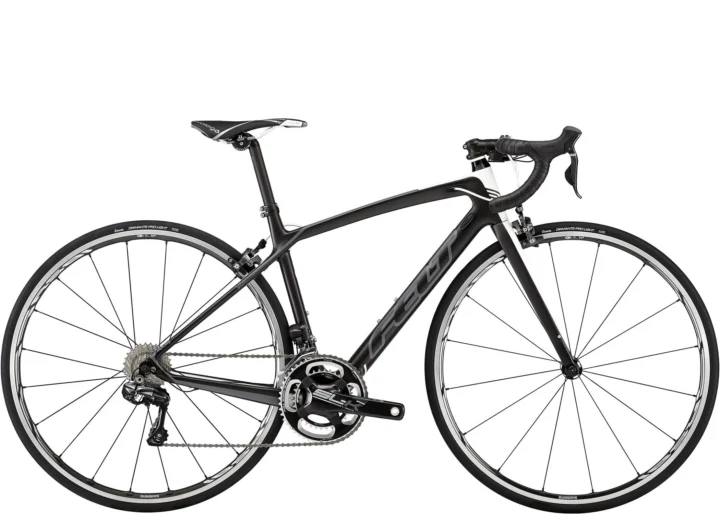 Image not available