2026
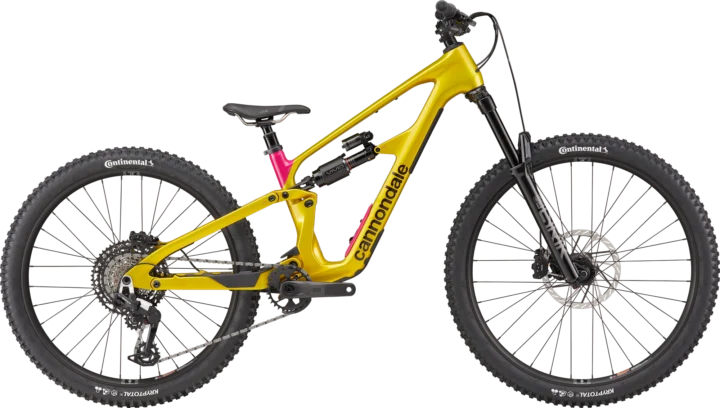
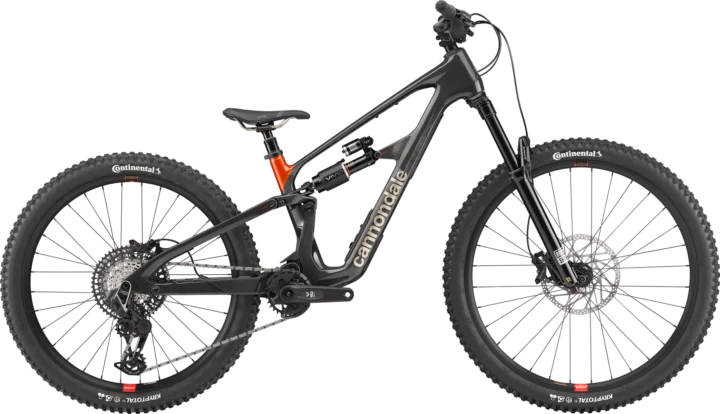
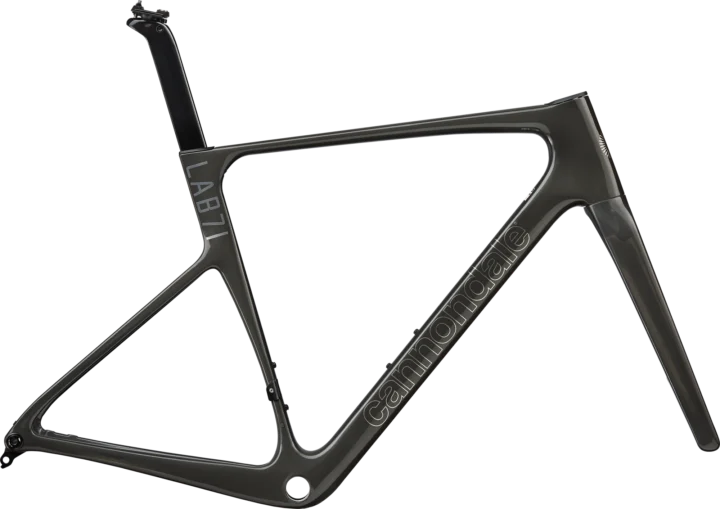
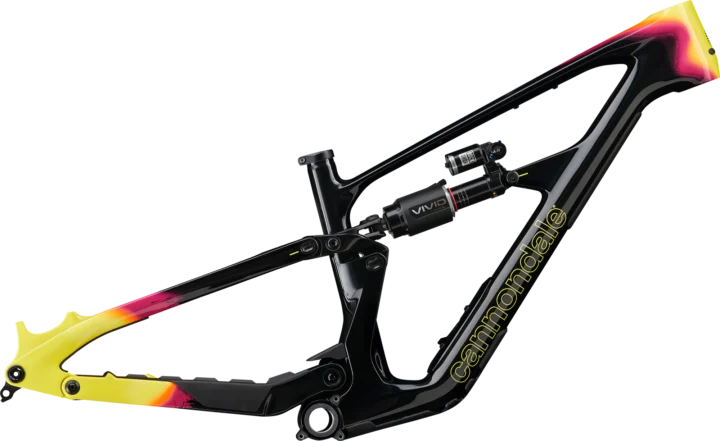
Bad Habit Frameset
Original MSRP $3,499.00
Velopedia Brand Reference
Cannondale is an American bicycle brand with one of the industry’s broadest product ranges. It makes road, gravel, mountain, electric, fitness, urban, cargo and children’s bikes, ranging from recreational models to professional-level race machines.

Velopedia Bicycle Archive
Model years 1993–2026
Company overview
Founded in Connecticut in 1971, Cannondale became particularly influential through its large-diameter aluminum frames, BB30 bottom-bracket system, HollowGram components and single-sided Lefty suspension forks. Modern Cannondale bikes combine that history of proprietary engineering with increasingly common standards such as threaded bottom brackets and Universal Derailleur Hangers.
Cannondale is headquartered in Wilton, Connecticut, with additional engineering operations in Freiburg, Germany. It is part of Pon.Bike, which also owns Cervélo, Santa Cruz, Gazelle and several other cycling brands.
Cannondale’s major bike families include:
LAB71 versions represent Cannondale’s most advanced and expensive builds. Depending on the model, LAB71 may indicate a lighter carbon construction, limited-production frame, premium components or some combination of the three. Hi-MOD denotes another premium carbon construction level below or alongside LAB71, depending on the model generation.
Topstone prioritizes versatility, rough-surface control and carrying capacity, while SuperX places more emphasis on racing speed. Tire clearance on Topstone Carbon varies with the fork, drivetrain and measured tire width, so the specification for the exact model should be consulted before purchasing tires or wheels.
Older Cannondale catalogs also contain cyclocross, gravel-race and electric-gravel models using names such as SuperSix EVO CX, SuperSix EVO SE and Topstone Neo. Their standards should not be inferred from the latest SuperX or Topstone frames.
Cannondale has also produced Jekyll enduro bikes and several longer-travel gravity platforms. Some remain visible in online navigation or dealer inventory even when they are no longer central to the current range. Verify the production year and availability rather than treating every product page as a current model.
Cannondale commonly uses the Neo name for electric models. Its electric range includes:
Cannondale uses drive systems from companies including Bosch and Mahle rather than one universal electric platform. Motor, battery, charger, display, software and diagnostic requirements therefore vary substantially between models and years.
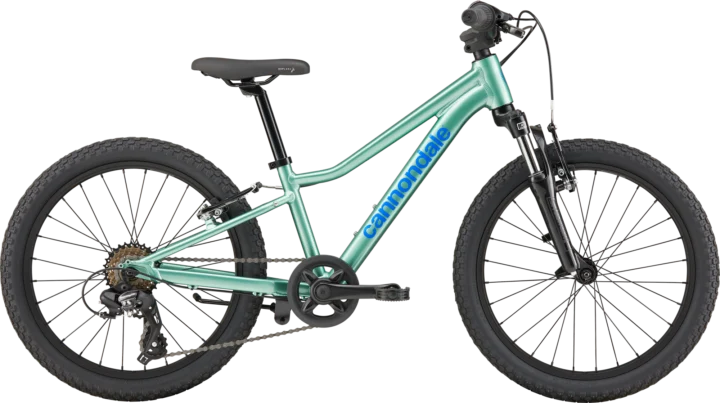
The company also sells Quick, Quick CX, Treadwell and Adventure hybrid bikes, plus children’s bikes with 12-inch through 24-inch wheels.
The Lefty is Cannondale’s most recognizable proprietary component. Instead of two fork legs, it uses a single structural leg with a dedicated hub interface. Current versions include the cross-country Lefty Ocho and gravel-specific Lefty Oliver.
A Lefty is not serviced or replaced in exactly the same way as a conventional suspension fork. Important ownership considerations include:
Cannondale’s published service schedule specifies a 100-hour service, or service before one year, and a more extensive 200-hour service, or service before two years, for Lefty Ocho, Oliver, Olaf, 2.0 and SuperMax forks. Severe conditions can justify shorter intervals.
Lefty Oliver travel has changed between generations. A replacement fork, air-spring component or service kit should never be selected from the Lefty name alone.
Topstone Carbon uses Kingpin, a lightweight rear-suspension system built into the frame. A thru-axle pivot passes through the seat tube and allows controlled flex in the seatstays, frame and seatpost.
Cannondale describes the system as producing approximately 30mm of vertical movement at the saddle and around 10mm at the rear axle. It has no rear shock or conventional linkage, so it is mechanically simpler than a full-suspension mountain bike.
Kingpin is intended to reduce fatigue and improve rear-wheel contact on rough roads. It is not equivalent to 30mm of conventional rear-wheel suspension travel, and it does not remove the need for appropriate tire pressure. The rider’s weight, frame size, seatpost extension, tire volume and riding position all influence how the system feels.
Although Kingpin requires less routine service than a conventional linkage, its pivot hardware, bushings and surrounding carbon structure should still be inspected during normal maintenance.
Current Scalpel frames use flattened carbon sections called FlexPivots in place of conventional pivot bearings near the rear axle. This allows Cannondale to create four-bar suspension behavior without adding another pair of bearings and associated hardware.
Proportional Response is Cannondale’s broader size-specific design approach. Depending on the bike, Cannondale may change chainstay length, suspension kinematics, geometry, carbon layup or tube construction between sizes.
This means that two sizes of the same model may differ by more than reach and seat-tube length. Wheel size, fork travel, chainstay length and suspension configuration can also change on certain platforms. Buyers comparing sizes should use the complete geometry and specification chart rather than relying only on the nominal size label.
SmartSense integrates lights, a rear-facing radar and a central battery on selected Synapse and Topstone models. The second-generation system uses a 50Wh battery housed in the frame’s StashPort compartment and can power connected lighting, radar and compatible SRAM AXS equipment.
SmartSense can simplify charging and improve equipment integration, but it also introduces model-specific wiring, brackets, batteries and firmware. First- and second-generation components should not be assumed to be interchangeable.
Before buying a used SmartSense-equipped bike, confirm that the central battery, charger, radar, lights, wiring and mounting hardware are included and functional. Missing components can significantly affect the cost of restoring the complete system.
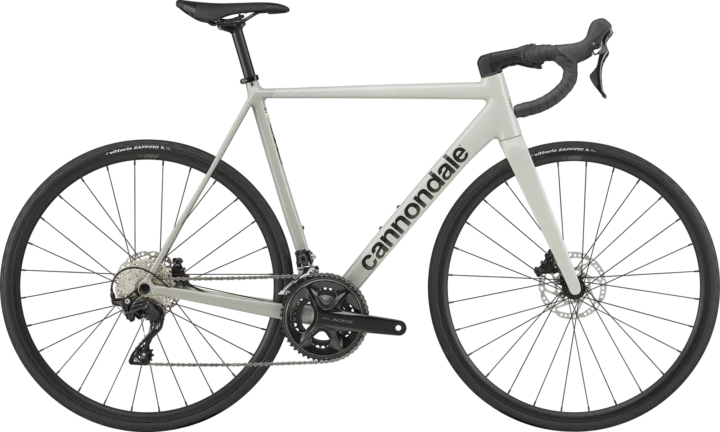
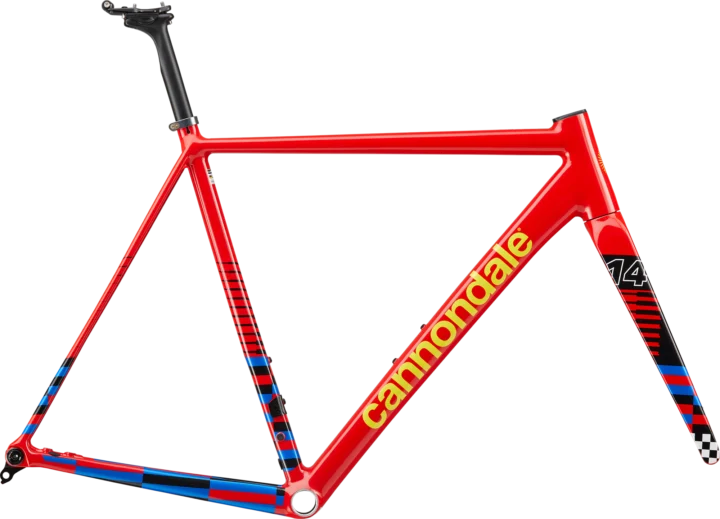
Cannondale has used both common and proprietary standards throughout its history. Current models such as the Gen 5 SuperSix EVO, CAAD14, Scalpel and Habit increasingly use threaded BSA bottom brackets and UDH-compatible rear dropouts. Older bikes may instead use BB30 or PF30 bottom brackets, Cannondale Si cranksets, proprietary spiders, special headsets or model-specific derailleur hangers.
Integrated road cockpits can also complicate fit changes. Current SuperSix EVO and CAAD14 frames use Cannondale’s Delta steerer arrangement, while higher-end builds may use one-piece SystemBar cockpits. Stem length, handlebar width, cable routing and computer-mount compatibility should be checked before ordering replacement parts.
The clean appearance of an integrated cockpit can make a simple fit change more labor-intensive than it would be on a conventional bar and stem.
Many older Cannondale mountain and gravel frames use Ai, or Asymmetric Integration. Depending on the frame, the rear wheel may require approximately 3mm or 6mm of offset dish, with a corresponding drivetrain or chainring offset.
A normally dished replacement wheel may fit into an Ai frame but place the rim and tire off-center. Conversely, an Ai-dished wheel installed in a conventional frame will also sit incorrectly.
Cannondale stopped developing new Ai-offset platforms after 2024, and current-generation Scalpel, Topstone and SuperX frames use conventional rear-wheel alignment. Ai nevertheless remains a critical compatibility issue for the large number of earlier Cannondales in service.
Before replacing a rear wheel, crank or chainring on an older Cannondale, identify whether the frame uses Ai and confirm the required offset in its owner’s manual.
Cannondale’s established dealer network is an advantage for assembly, warranty processing and model-specific service. In the United States, bicycles ordered through Cannondale can be delivered to a participating shop for assembly.
Dealer support is particularly valuable for Lefty suspension, integrated road cockpits, SmartSense systems and electric models requiring manufacturer diagnostics. A general bicycle shop can handle normal drivetrain, brake and wheel service, but it may not have the tooling, software or parts for every proprietary system.
For any Cannondale, record the complete model name, model code, serial number and production year. Cannondale’s online archive extends back to 2008, while older owner’s manuals and suspension documents cover many additional products.
When considering a used bike:
Cannondale revised its warranty terms for models introduced in 2026 and later. Covered frames, swingarms, stays, FlexPivots and full-suspension shock links receive coverage for the stated lifetime of the product. Cannondale-branded components, paint and decals generally receive one year of coverage.
Coverage is limited to the original owner and is not transferable. Warranty claims require the original dated receipt and must be processed through an authorized Cannondale retailer on the same continent where the bicycle was purchased. Labor and component-transfer costs remain the owner’s responsibility.
Earlier models use a different warranty schedule. Most pre-2026 frames were covered for the lifetime of the original owner, while gravity-category frames and full-suspension rear-frame components had shorter stated periods. The applicable warranty is therefore determined by the model’s introduction year, not simply the year in which a remaining bike was purchased.
Cannondale is a strong option for riders who want access to a large dealer network, multiple price levels and distinctive engineering. Its range covers everything from a child’s first bike or practical commuter to professional road, gravel and cross-country race equipment.
The brand is less straightforward for buyers who want every component to follow generic standards. Cannondale’s proprietary systems can provide useful performance or integration, but they reward accurate model identification and informed maintenance.
A current Cannondale using BSA, UDH and conventional wheel spacing can be relatively straightforward to own. An older Lefty-equipped, Ai-offset or BB30 model requires more careful parts selection. Understanding that distinction is the key to evaluating a Cannondale on its actual merits rather than judging the entire brand by one generation of technology.
Practical reference
Warranty claims require an authorized Cannondale retailer on the continent of purchase and the original dated sales receipt.
Read the official warranty policy →
Warranty terms can vary by product, region, purchase date, and owner status. Confirm the current policy with the manufacturer.
Historical specifications