Velopedia Bicycle Archive
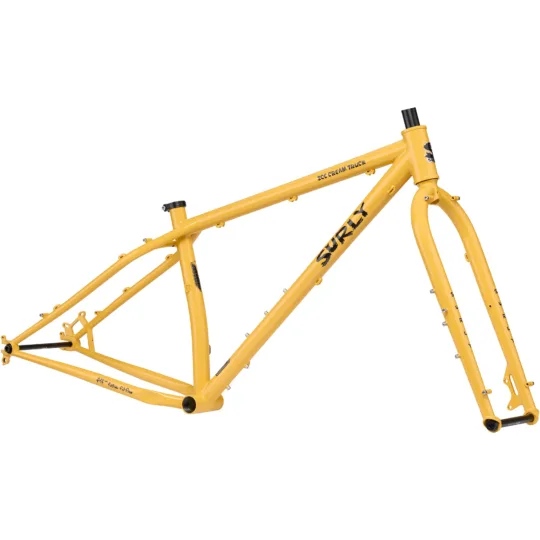
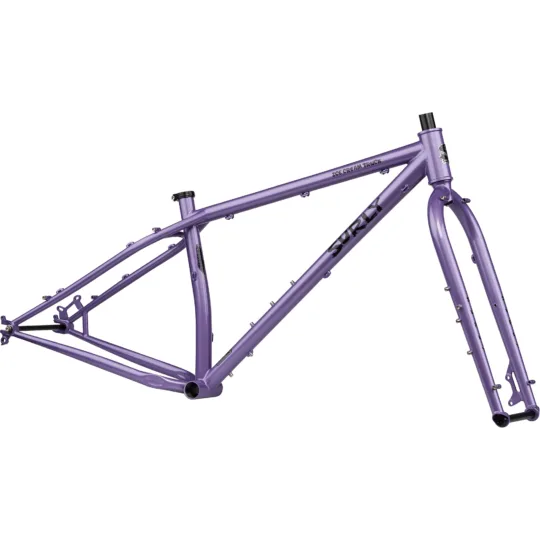
Surly Krampus Frameset - Prickly Pear
Mountain bicycle from the Velopedia specification archive.
- Model year
- Not published by manufacturer
- Original MSRP
- $1,099.00
- Sizes
- S, M, L, XL
- Colors
- Prickly Pear
- Geometry
- 4 manufacturer sizes · Ride analysis
- Archive ID
- 900000881
- Catalog verified
- August 19, 2026
Current market
Snapshot not yet availableMove, scroll, tap or type to start the protected update.
Used-frameset inspection
If you’re buying this frameset used
Before buying: confirm the serial number and exact model, inspect frame and fork alignment, and inventory every included axle, hanger, clamp, headset part, cable guide and proprietary fitting.
Inspect the frame and fork →- FrameCheck paint chips, vent holes and the inside of the seat tube for corrosion. Also look for dents, bent tubes and cracking around welded or brazed joints.Inspect the frame and fork →
- Included hardwareInventory every axle, hanger, clamp, headset part, cable guide, frame plug and proprietary fitting included with the frameset. Confirm replacement availability before treating a missing small part as insignificant.
- AlignmentSight along the frame and fork from several directions. Confirm that the fork, rear dropouts, head tube and other visible interfaces appear straight; professional measurement is appropriate when alignment cannot be established visually.
Used-frameset inspection checklist 14 universal checks for a record with limited component data Open checklistClose checklist
The archived record does not contain enough component detail for a fully specification-informed frameset checklist. Use these universal checks on the frameset in front of you, inventory every included part and confirm exact interfaces before choosing components.
Identity and fit
Follow the full used-bike inspection order →Archived: Surly Krampus Frameset - Prickly Pear · Mountain · Published sizes: S, M, L, XL
Frame and fork
Inspect the frame and fork →Archived: Frame: Surly Krampus - 100% Surly Chromoly Steel, Natch tubing, double-butted main triangle, trumpet flared tubes, TIG welded, E.D. coated · Fork: Surly Krampus - 100% Surly Chromoly Steel, Natch tubing, double-butted main triangle, trumpet flared tubes, TIG welded, E.D. coated · Steel
Alignment
Inspect the frame and fork →Frame interfaces
Inspect the bottom bracket and shell →Before accepting the frameset
Inspect the frame and fork →Have you owned this bike?Help preserve its real-world history by sharing your owner experience.
Share the details that would help another rider understand how this model fits, rides and holds up over time. Velopedia reviews every contribution before publication.
Already contributed? Send me a fresh private edit link
For privacy, Velopedia shows the same confirmation whether or not an experience exists.
Frameset
| Frame Construction | Surly Krampus - 100% Surly Chromoly Steel, Natch tubing, double-butted main triangle, trumpet flared tubes, TIG welded, E.D. coated |
|---|---|
| Frame Material | Steel |
| Fork | Surly Krampus - 100% Surly Chromoly Steel, Natch tubing, double-butted main triangle, trumpet flared tubes, TIG welded, E.D. coated |
| Fork Material | Steel |
Wheels & Tires
| Wheel Size | 29" |
|---|
Size-specific frame data
Geometry
Manufacturer-published geometry normalized for consistent archival comparison. Effective top tube and reach remain separate measurements because they describe different aspects of fit.
| Measurement | Small | Medium | Large | X-Large |
|---|---|---|---|---|
| Seat tube | 368 mm | 419 mm | 470 mm | 521 mm |
| Effective top tube | 585 mm | 610 mm | 635 mm | 660 mm |
| Head tube | 90 mm | 100 mm | 110 mm | 120 mm |
| Head-tube angle | 69° | 69° | 69° | 69° |
| Seat-tube angle | 73° | 73° | 73° | 73° |
| Chainstay / rear center | 435 mm | 435 mm | 435 mm | 435 mm |
| Wheelbase | 1087 mm | 1113 mm | 1138 mm | 1164 mm |
| Bottom-bracket drop | 65 mm | 65 mm | 65 mm | 65 mm |
| Reach | 404 mm | 426 mm | 448 mm | 470 mm |
| Stack | 593 mm | 602 mm | 612 mm | 621 mm |
| Standover height | 770 mm | 797 mm | 825 mm | 853 mm |
| Fork offset / rake | 47 mm | 47 mm | 47 mm | 47 mm |
| Fork length / axle-to-crown | 483 mm | 483 mm | 483 mm | 483 mm |
Geometry source: Manufacturer HTML geometry table ↗ Measurements can vary by configuration, wheel size, or flip-chip position where noted by the manufacturer.
Geometry interpretation
What this geometry means
Small geometry
Riding position
The 593 mm stack is tall relative to the 404 mm reach, pointing to a more upright front-end position rather than an especially long, low cockpit. The 73° effective seat angle is comparatively relaxed for a modern mountain bike, placing the seated position farther behind the bottom bracket than a steep climbing-oriented layout.
Handling tendencies
A 69° head angle combined with a 1087 mm wheelbase points to quicker-steering and more responsive steering and chassis behavior. The longer the chassis and slacker the front end, the more the bike tends to favor composure over very quick direction changes.
Medium geometry
Riding position
The 602 mm stack is tall relative to the 426 mm reach, pointing to a more upright front-end position rather than an especially long, low cockpit. The 73° effective seat angle is comparatively relaxed for a modern mountain bike, placing the seated position farther behind the bottom bracket than a steep climbing-oriented layout.
Handling tendencies
A 69° head angle combined with a 1113 mm wheelbase points to quicker-steering and more responsive steering and chassis behavior. The longer the chassis and slacker the front end, the more the bike tends to favor composure over very quick direction changes.
Large geometry
Riding position
A 448 mm reach paired with 612 mm of stack gives this size a moderate frame proportion: roomy enough when standing without pushing strongly toward either a very low or very upright front end. The 73° effective seat angle is comparatively relaxed for a modern mountain bike, placing the seated position farther behind the bottom bracket than a steep climbing-oriented layout.
Handling tendencies
A 69° head angle combined with a 1138 mm wheelbase points to quicker-steering and more responsive steering and chassis behavior. The longer the chassis and slacker the front end, the more the bike tends to favor composure over very quick direction changes.
X-Large geometry
Riding position
A 470 mm reach paired with 621 mm of stack gives this size a moderate frame proportion: roomy enough when standing without pushing strongly toward either a very low or very upright front end. The 73° effective seat angle is comparatively relaxed for a modern mountain bike, placing the seated position farther behind the bottom bracket than a steep climbing-oriented layout.
Handling tendencies
A 69° head angle combined with a 1164 mm wheelbase points to quicker-steering and more responsive steering and chassis behavior. The longer the chassis and slacker the front end, the more the bike tends to favor composure over very quick direction changes.
Across the size range
From Small to X-Large, reach grows by 66 mm and stack by 28 mm, showing how the frame becomes both longer and taller through the published size range. The rear center stays essentially constant at about 435 mm across sizes, so most of the wheelbase growth happens in the front half of the bike rather than by lengthening the rear triangle.
Geometry describes frame proportions and likely tendencies, not a ride test. Rider proportions, cockpit setup, tires, suspension settings, wheel configuration, and component choices can materially change how a bicycle fits and feels.
Gallery
Specifications are presented as a reference. Components may vary by market, size, production run, or later manufacturer revisions.