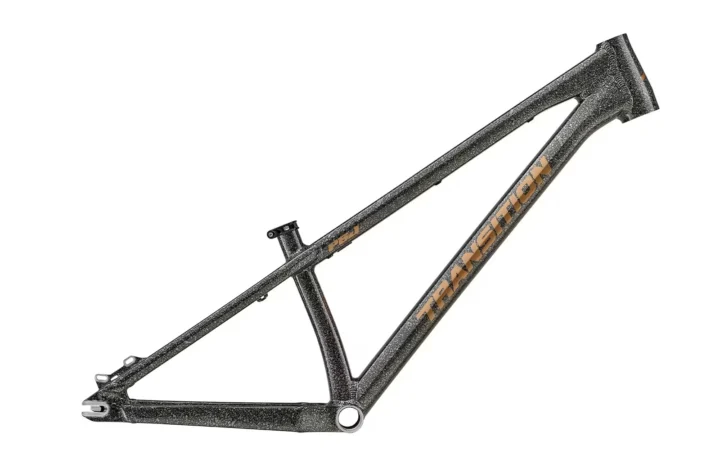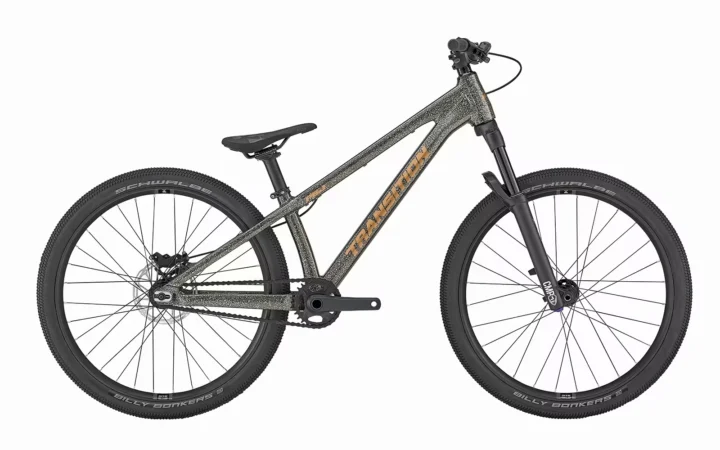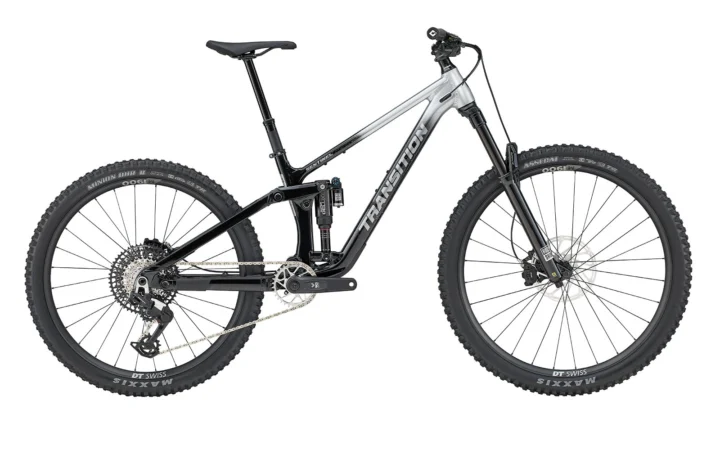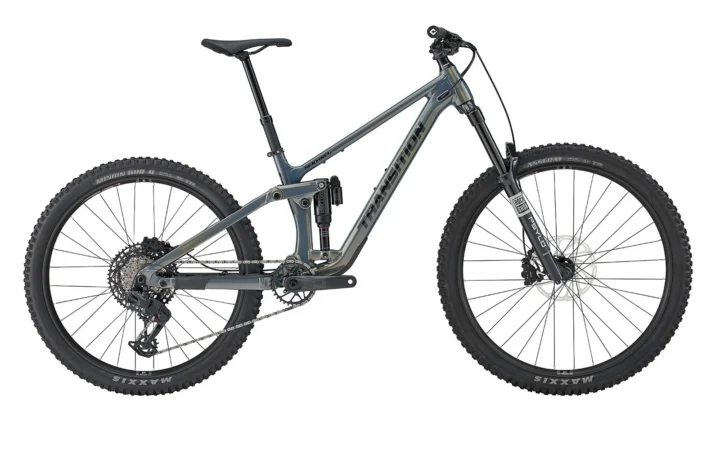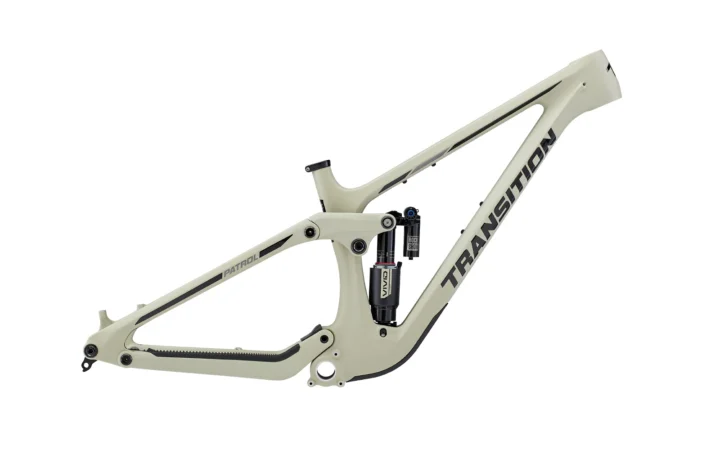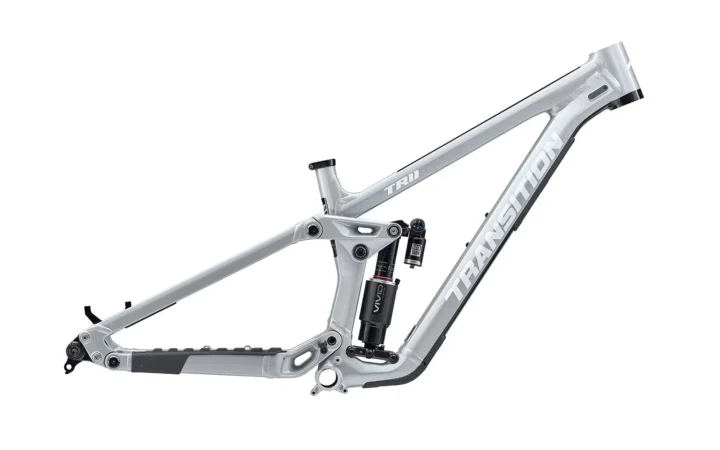
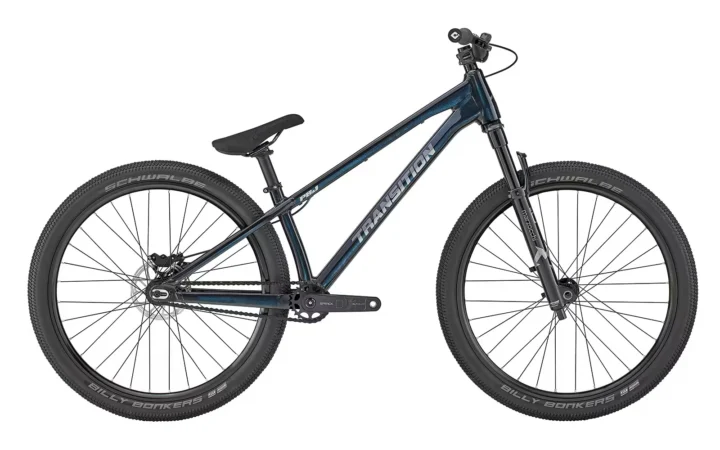
2026
PBJ Complete
Original MSRP $2,099.00
Velopedia Brand Reference
Founded in 2001 in Bellingham, Washington, Transition has grown from a garage startup into a globally respected MTB brand.

Velopedia Bicycle Archive
Model years 2006–2026
Company overview
Transition is a mountain-bike company centered on aggressive trail riding, enduro, downhill, dirt jumping, and electric mountain bikes. Even its shorter-travel models use modern geometry intended for technical singletrack rather than traditional cross-country racing. The catalog does not extend into road, gravel, or recreational hybrid bikes.
The brand fits the enthusiast end of the mountain-bike market, with carbon and aluminum options across parts of the range. A rider might consider Transition for its descending-oriented geometry, broad suspension adjustability, and unusually clear progression between short-travel trail bikes and full gravity machines. The tradeoff is that several models overlap on paper, and even the lighter bikes may feel excessive on smooth or relatively flat trails.
Transition’s lineup is organized primarily by suspension travel, wheel configuration, and intended terrain.
Transition’s Speed Balanced Geometry combines relatively slack head angles, short-offset forks, steep effective seat angles, and long front centers. The objective is to preserve front-wheel weighting and manageable steering while gaining stability on steep or fast terrain. This approach is now common in mountain biking, but Transition applies it across nearly the entire trail range, including the short-travel Spur.
That matters when comparing models. Suspension travel alone does not explain how each bike is intended to behave. The Spur is the efficient singletrack option, the Smuggler adds trail-bike margin, and the Sentinel is the broad all-mountain platform. The Patrol’s mixed wheels favor a more maneuverable configuration, while the full-29 Spire provides the most travel among Transition’s pedalable non-electric bikes.
Most full-suspension models use Transition’s GiddyUp layout, with sag ranges and leverage curves designed to work without unusually complicated setup. Selected models support both air and coil shocks, but that should not be assumed across every frame. Correct shock dimensions, mounting hardware, spring clearance, and tune remain model-specific.
The geometry also creates the main tradeoff. Long wheelbases, slack front ends, substantial tires, and descending-focused component packages are helpful on rough trails but can feel slower to change direction or less lively on mellow terrain. Buying more travel than the local trails justify can leave a rider pushing extra bike on every climb.
Choose size by reach, stack, seated position, and desired handling—not height alone. Transition’s low standover measurements can allow some riders to use more than one size, but sizing up increases an already long front center. A test ride is particularly useful if moving from an older, shorter mountain bike.
Check the exact wheel configuration and flip-chip position. The Sentinel and Relay support multiple configurations, while the Patrol is designed around mixed wheels. Changing rear-wheel diameter, fork travel, or shock stroke without following Transition’s specifications can alter bottom-bracket height, head angle, tire clearance, and frame clearance.
Carbon and aluminum versions may not have identical features. For example, the carbon Sentinel includes in-frame storage, while the aluminum frame omits it. Confirm storage, derailleur-hanger type, shock hardware, brake mounts, chainline, and maximum dropper insertion on the precise frame being purchased.
Transition’s electric models are especially distinct. Bosch CX, Bosch SX, Fazua Ride 60, and SRAM Powertrain components are not interchangeable ecosystems. Battery capacity, charger, controls, software, drivetrain integration, and authorized service access should be evaluated before choosing between them. The Relay’s removable battery is a useful distinction, but riding without it does not make the bike equivalent in weight or feel to a conventional Transition.
Transition is best suited to mountain bikers whose local riding includes steep, rough, or fast trails and who value confident geometry over minimum weight. Riders on smoother singletrack, cross-country race courses, or mixed-use paths may be happier with a lighter and less aggressive platform.
Historical specifications