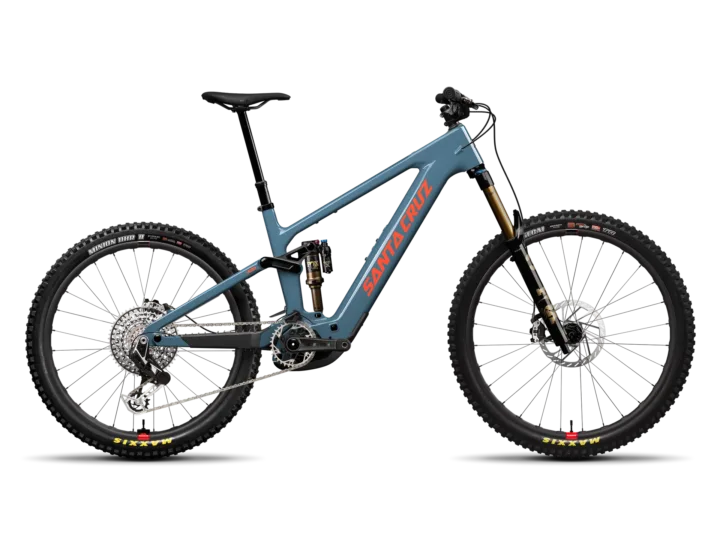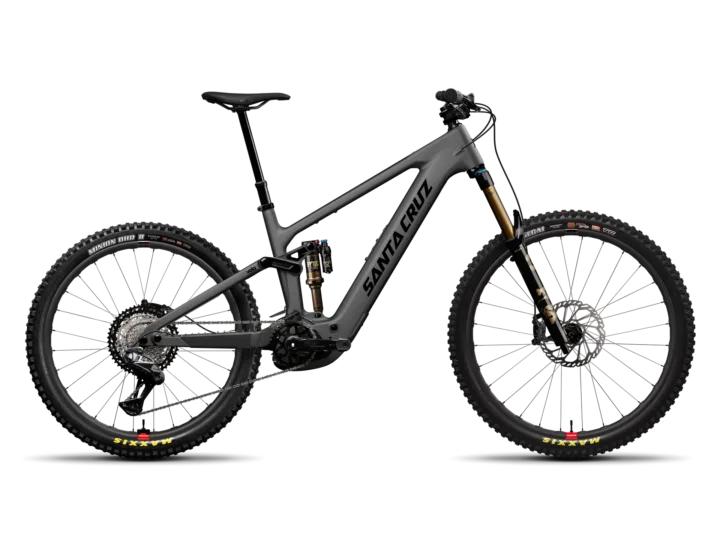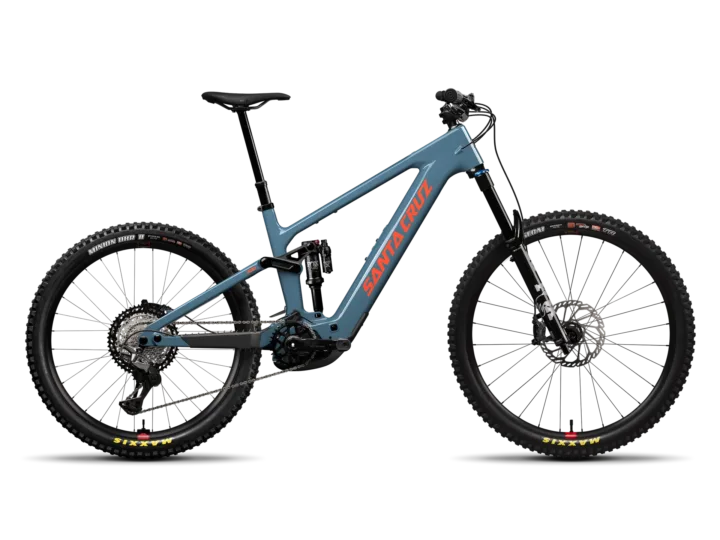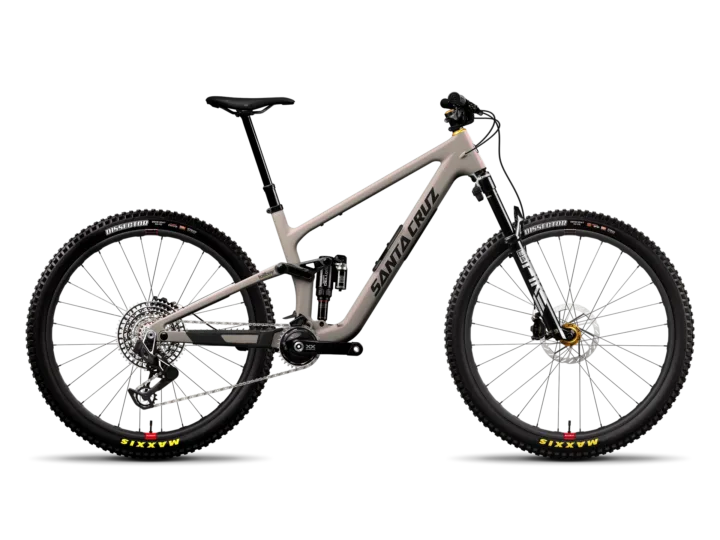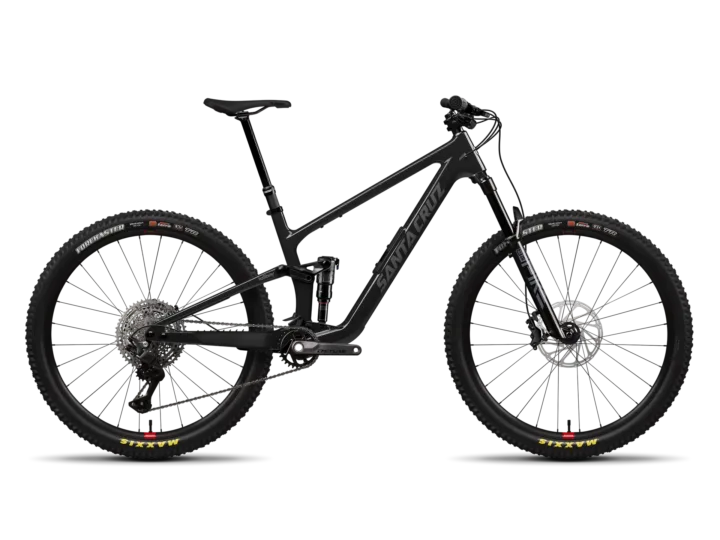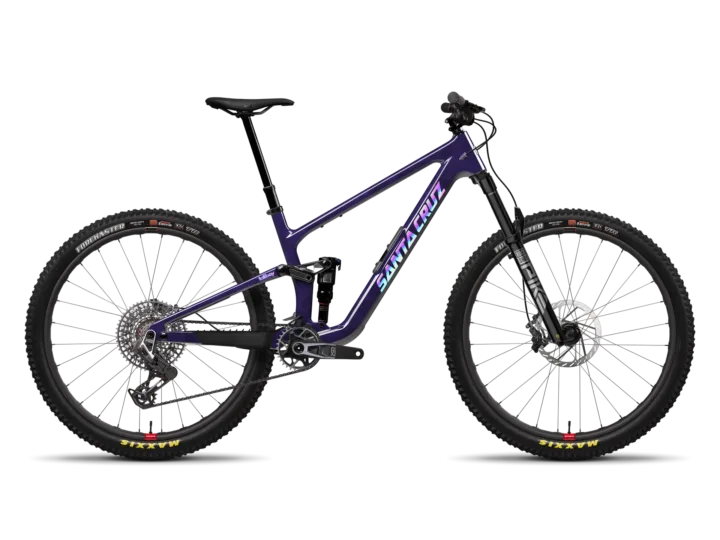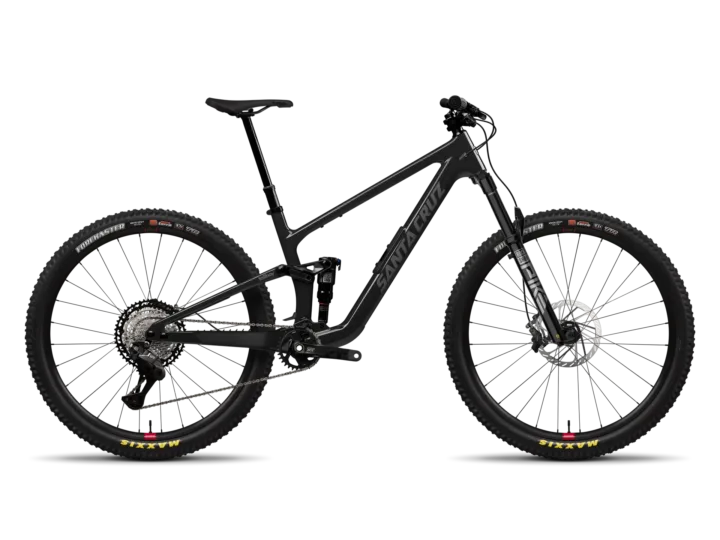
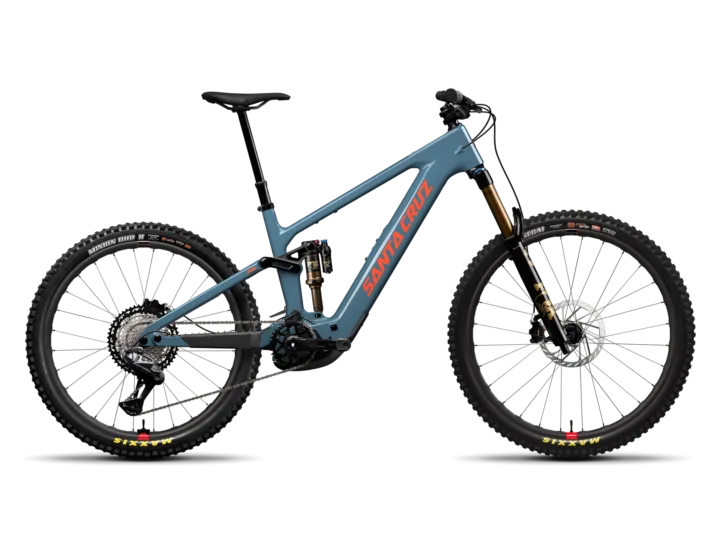
2027
Vala XT Di2 RSV
Original MSRP $5,649.00
Velopedia Brand Reference
Premium mountain bikes with VPP suspension, lifetime bearing support, and boutique-level build quality. Popular models: Hightower, Megatower, 5010, Heckler.

Velopedia Bicycle Archive
Model years 1995–2027
Company overview
Santa Cruz is a mountain-bike-centered company whose range is built primarily for enthusiast trail, enduro, downhill and cross-country riding. Carbon full-suspension bikes dominate the catalog, although the company also offers hardtails, aluminum models, electric mountain bikes and a small drop-bar range.
The brand occupies the premium end of the market. Even its lower-priced builds use the same basic frame platform and geometry as more expensive versions, while upper builds add lighter carbon construction, electronic drivetrains, higher-level suspension and Reserve wheels. Riders may consider Santa Cruz for its tightly focused model range, extensive technical documentation and clear separation between different travel and wheel-size applications.
The main tradeoff is cost. Santa Cruz offers fewer genuinely budget-oriented options than a large general-purpose manufacturer, and model-specific suspension hardware, storage parts and electric components require more attention than a simple hardtail or conventionally equipped gravel bike.
Santa Cruz currently concentrates on these categories:
Santa Cruz built much of its reputation around VPP suspension. The layout uses two short links rotating in opposite directions to create a virtual pivot whose position changes as the suspension moves. Santa Cruz tunes the leverage curve, axle path and pedaling characteristics differently for a Blur, Tallboy, Hightower or Nomad rather than applying one identical configuration across the range.
VPP remains central to the conventional full-suspension lineup and the Heckler SL, but it is no longer universal. Current Vala and Bullit electric bikes use four-bar suspension instead. That distinction matters when comparing replacement hardware, suspension setup and service procedures; a Santa Cruz badge does not guarantee that two frames share the same linkage architecture.
Carbon C and Carbon CC provide another important distinction. C frames generally retain the same geometry and principal features while using a heavier carbon construction. CC frames reduce weight and are usually assigned to more expensive builds. Compatibility can also differ. For example, the current Hightower CC frame is intended for wireless derailleurs, while the C version retains routing for cable-operated shifting.
Identify the exact model generation before ordering anything. A Tallboy 5 and Tallboy 6, or a Hightower 3 and Hightower 4, can use different travel, shock dimensions, mounting hardware and frame parts. Santa Cruz’s support pages provide exploded diagrams and generation-specific specifications; the family name alone is not enough.
“MX” means a 29-inch front wheel paired with a 27.5-inch rear wheel. Some Santa Cruz models are designed exclusively around that combination, while others have model-specific adjustment options. Do not assume a 29er can be converted by installing a smaller rear wheel without checking flip-chip settings, geometry and tire-to-frame clearance.
Glovebox internal storage appears on several current carbon frames. The opening, latch and supplied bags are convenient, but replacement pieces are frame-specific. Dropper-post insertion also varies by frame size, so compare the published insertion limits with the actual post and saddle height rather than choosing travel solely by rider height.
Electric buyers should distinguish between the Bosch systems used by the Vala and Bullit and the Fazua systems used by the Heckler SL and Skitch. Batteries, chargers, controls, firmware and range-extender options are platform-specific. Suspension and brake service requirements also increase with the weight and intended terrain of the longer-travel electric models.
Santa Cruz will appeal most to riders who want a focused trail or gravity bike, value detailed setup information and are prepared to maintain a premium suspension platform. Riders seeking an inexpensive recreational bicycle, conventional component interchangeability or a broad road and city range will find better options elsewhere.
Historical specifications