
Velopedia Bicycle Archive
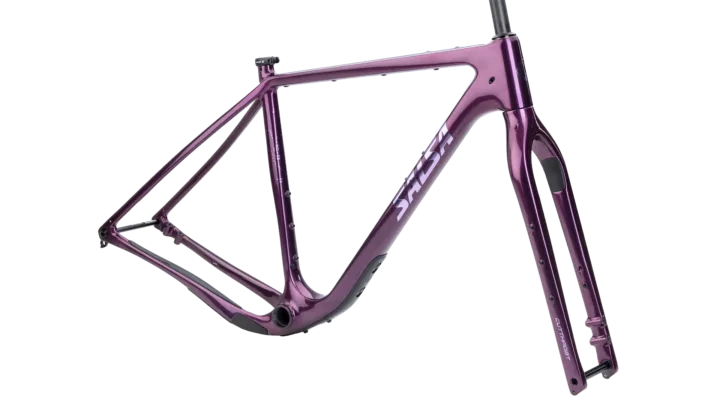
2026 Salsa Flyway C DLX Frameset
Cyclocross/Gravel bicycle from the Velopedia specification archive.
Selling this bike? Create a Bike History Report
- Original MSRP
- $2,799.00
- Sizes
- XS, S, M, M/L, L, XL
- Colors
- Midnight
- Geometry
- 6 manufacturer sizes · Ride analysis
- Archive ID
- 900000573
Current market
Snapshot not yet availableMove, scroll, tap or type to start the protected update.
Used-frameset inspection
If you’re buying this frameset used
Before buying: confirm the serial number and exact model, inspect frame and fork alignment, and inventory every included axle, hanger, clamp, headset part, cable guide and proprietary fitting.
Inspect the frame and fork →- FrameInspect the frame in bright light, especially around the head tube, bottom bracket, chainstays and clamped areas. Look for cracks, ripples, crushed sections or signs of a previous impact.Inspect the frame and fork →
- Included hardwareInventory every axle, hanger, clamp, headset part, cable guide, frame plug and proprietary fitting included with the frameset. Confirm replacement availability before treating a missing small part as insignificant.
- AlignmentSight along the frame and fork from several directions. Confirm that the fork, rear dropouts, head tube and other visible interfaces appear straight; professional measurement is appropriate when alignment cannot be established visually.
Used-frameset inspection checklist 14 universal checks for a record with limited component data Open checklistClose checklist
The archived record does not contain enough component detail for a fully specification-informed frameset checklist. Use these universal checks on the frameset in front of you, inventory every included part and confirm exact interfaces before choosing components.
Identity and fit
Follow the full used-bike inspection order →Archived: 2026 Salsa Flyway C DLX Frameset · Cyclocross/Gravel · Published sizes: XS, S, M, M/L, L, XL
Frame and fork
Inspect the frame and fork →Archived: Frame: Ultra-high-modulus carbon fiber · Fork: Carbon fiber · Carbon Fiber
Alignment
Inspect the frame and fork →Frame interfaces
Inspect the bottom bracket and shell →Before accepting the frameset
Inspect the frame and fork →Have you owned this bike?Help preserve its real-world history by sharing your owner experience.
Share the details that would help another rider understand how this model fits, rides and holds up over time. Velopedia reviews every contribution before publication.
Already contributed? Send me a fresh private edit link
For privacy, Velopedia shows the same confirmation whether or not an experience exists.
Frameset
| Frame Construction | Ultra-high-modulus carbon fiber |
|---|---|
| Frame Material | Carbon Fiber |
| Fork | Carbon fiber |
| Fork Material | Carbon Fiber |
Cockpit & Contact Points
| Headset | FSA Crii |
|---|---|
| Stem | FSA SMR-II |
Wheels & Tires
| Wheel Size | 700C |
|---|
Size-specific frame data
Geometry
Manufacturer-published geometry normalized for consistent archival comparison. Effective top tube and reach remain separate measurements because they describe different aspects of fit.
| Measurement | X-Small | Small | Medium | Medium/Large | Large | X-Large |
|---|---|---|---|---|---|---|
| Seat tube | 390 mm | 430 mm | 470 mm | 505 mm | 540 mm | 575 mm |
| Effective top tube | 510 mm | 535 mm | 555 mm | 575 mm | 600 mm | 620 mm |
| Head tube | 90 mm | 100 mm | 120 mm | 145 mm | 180 mm | 200 mm |
| Head-tube angle | 70.5° | 70.5° | 70.5° | 70.5° | 70.5° | 70.5° |
| Seat-tube angle | 76° | 75° | 74° | 74° | 74° | 74° |
| Chainstay / rear center | 425 mm | 425 mm | 425 mm | 425 mm | 425 mm | 425 mm |
| Wheelbase | 1012 mm | 1027.7 mm | 1038.7 mm | 1060.2 mm | 1087.5 mm | 1108.7 mm |
| Bottom-bracket drop | 76 mm | 76 mm | 76 mm | 76 mm | 76 mm | 76 mm |
| Bottom-bracket height | 283 mm | 283 mm | 283 mm | 283 mm | 283 mm | 283 mm |
| Reach | 375.2 mm | 387.7 mm | 391.9 mm | 405.2 mm | 420.7 mm | 435.3 mm |
| Stack | 540.5 mm | 549.9 mm | 568.8 mm | 592.3 mm | 625.3 mm | 644.2 mm |
| Standover height | 682 mm | 715 mm | 749 mm | 780 mm | 814 mm | 843 mm |
| Fork offset / rake | 51 mm | 51 mm | 51 mm | 51 mm | 51 mm | 51 mm |
| Fork length / axle-to-crown | 419.9 mm | 419.9 mm | 419.9 mm | 419.9 mm | 419.9 mm | 419.9 mm |
| Crank length | 160 mm | 165 mm | 165 mm | 170 mm | 170 mm | 175 mm |
| Stem length | 60 mm | 60 mm | 70 mm | 80 mm | 90 mm | 100 mm |
Geometry source: Manufacturer HTML geometry table ↗ Measurements can vary by configuration, wheel size, or flip-chip position where noted by the manufacturer.
Geometry interpretation
What this geometry means
X-Small geometry
Riding position
A 375.2 mm reach and 540.5 mm stack give this size a middle-ground gravel proportion: neither especially stretched and low nor unusually upright. A 76° seat angle puts the rider relatively forward over the bottom bracket, shortening the effective seated reach compared with a more relaxed seat angle.
Handling tendencies
A 70.5° head angle combined with a 1012 mm wheelbase points to moderate and balanced steering and chassis behavior. The longer the chassis and slacker the front end, the more the bike tends to favor composure over very quick direction changes. A 76 mm bottom-bracket drop places the rider relatively low between the wheels, which can add a settled cornering feel while reducing pedal clearance compared with a higher bottom bracket.
Archive context
The seat angle of 76° sits toward the steeper end. The chainstay of 425 mm sits somewhat shorter than typical. Its wheelbase of 1012 mm sits somewhat shorter than typical.
Small geometry
Riding position
The 387.7 mm reach and 549.9 mm stack create a relatively long, low gravel position, favoring a more performance-oriented posture over a distinctly upright one. A 75° seat angle puts the rider relatively forward over the bottom bracket, shortening the effective seated reach compared with a more relaxed seat angle.
Handling tendencies
A 70.5° head angle combined with a 1027.7 mm wheelbase points to moderate and balanced steering and chassis behavior. The longer the chassis and slacker the front end, the more the bike tends to favor composure over very quick direction changes. A 76 mm bottom-bracket drop places the rider relatively low between the wheels, which can add a settled cornering feel while reducing pedal clearance compared with a higher bottom bracket.
Archive context
The seat angle of 75° sits toward the steeper end. Its reach of 387.7 mm sits somewhat longer than typical. The chainstay of 425 mm sits somewhat shorter than typical.
Medium geometry
Riding position
A 391.9 mm reach and 568.8 mm stack give this size a middle-ground gravel proportion: neither especially stretched and low nor unusually upright.
Handling tendencies
A 70.5° head angle combined with a 1038.7 mm wheelbase points to moderate and balanced steering and chassis behavior. The longer the chassis and slacker the front end, the more the bike tends to favor composure over very quick direction changes. A 76 mm bottom-bracket drop places the rider relatively low between the wheels, which can add a settled cornering feel while reducing pedal clearance compared with a higher bottom bracket.
Archive context
The chainstay of 425 mm sits somewhat shorter than typical. Its stack of 568.8 mm sits somewhat lower than typical. The seat angle of 74° sits somewhat steeper than typical.
Medium/Large geometry
Riding position
A 405.2 mm reach and 592.3 mm stack give this size a middle-ground gravel proportion: neither especially stretched and low nor unusually upright.
Handling tendencies
A 70.5° head angle combined with a 1060.2 mm wheelbase points to moderate and balanced steering and chassis behavior. The longer the chassis and slacker the front end, the more the bike tends to favor composure over very quick direction changes. A 76 mm bottom-bracket drop places the rider relatively low between the wheels, which can add a settled cornering feel while reducing pedal clearance compared with a higher bottom bracket.
Archive context
The seat angle of 74° sits somewhat steeper than typical. Its stack of 592.3 mm sits somewhat lower than typical. The chainstay of 425 mm sits somewhat shorter than typical.
Large geometry
Riding position
A 420.7 mm reach and 625.3 mm stack give this size a middle-ground gravel proportion: neither especially stretched and low nor unusually upright.
Handling tendencies
A 70.5° head angle combined with a 1087.5 mm wheelbase points to moderate and balanced steering and chassis behavior. The longer the chassis and slacker the front end, the more the bike tends to favor composure over very quick direction changes. A 76 mm bottom-bracket drop places the rider relatively low between the wheels, which can add a settled cornering feel while reducing pedal clearance compared with a higher bottom bracket.
Archive context
Its reach of 420.7 mm sits toward the longer end. The seat angle of 74° sits somewhat steeper than typical. The chainstay of 425 mm sits somewhat shorter than typical.
X-Large geometry
Riding position
A 435.3 mm reach and 644.2 mm stack give this size a middle-ground gravel proportion: neither especially stretched and low nor unusually upright.
Handling tendencies
A 70.5° head angle combined with a 1108.7 mm wheelbase points to moderate and balanced steering and chassis behavior. The longer the chassis and slacker the front end, the more the bike tends to favor composure over very quick direction changes. A 76 mm bottom-bracket drop places the rider relatively low between the wheels, which can add a settled cornering feel while reducing pedal clearance compared with a higher bottom bracket.
Archive context
Its reach of 435.3 mm sits toward the longer end. The seat angle of 74° sits toward the steeper end. The chainstay of 425 mm sits somewhat shorter than typical.
Across the size range
From X-Small to X-Large, reach grows by 60.1 mm and stack by 103.7 mm, showing how the frame becomes both longer and taller through the published size range. The rear center stays essentially constant at about 425 mm across sizes, so most of the wheelbase growth happens in the front half of the bike rather than by lengthening the rear triangle.
Geometry describes frame proportions and likely tendencies, not a ride test. Rider proportions, cockpit setup, tires, suspension settings, wheel configuration, and component choices can materially change how a bicycle fits and feels.
Gallery
Specifications are presented as a reference. Components may vary by market, size, production run, or later manufacturer revisions.


